
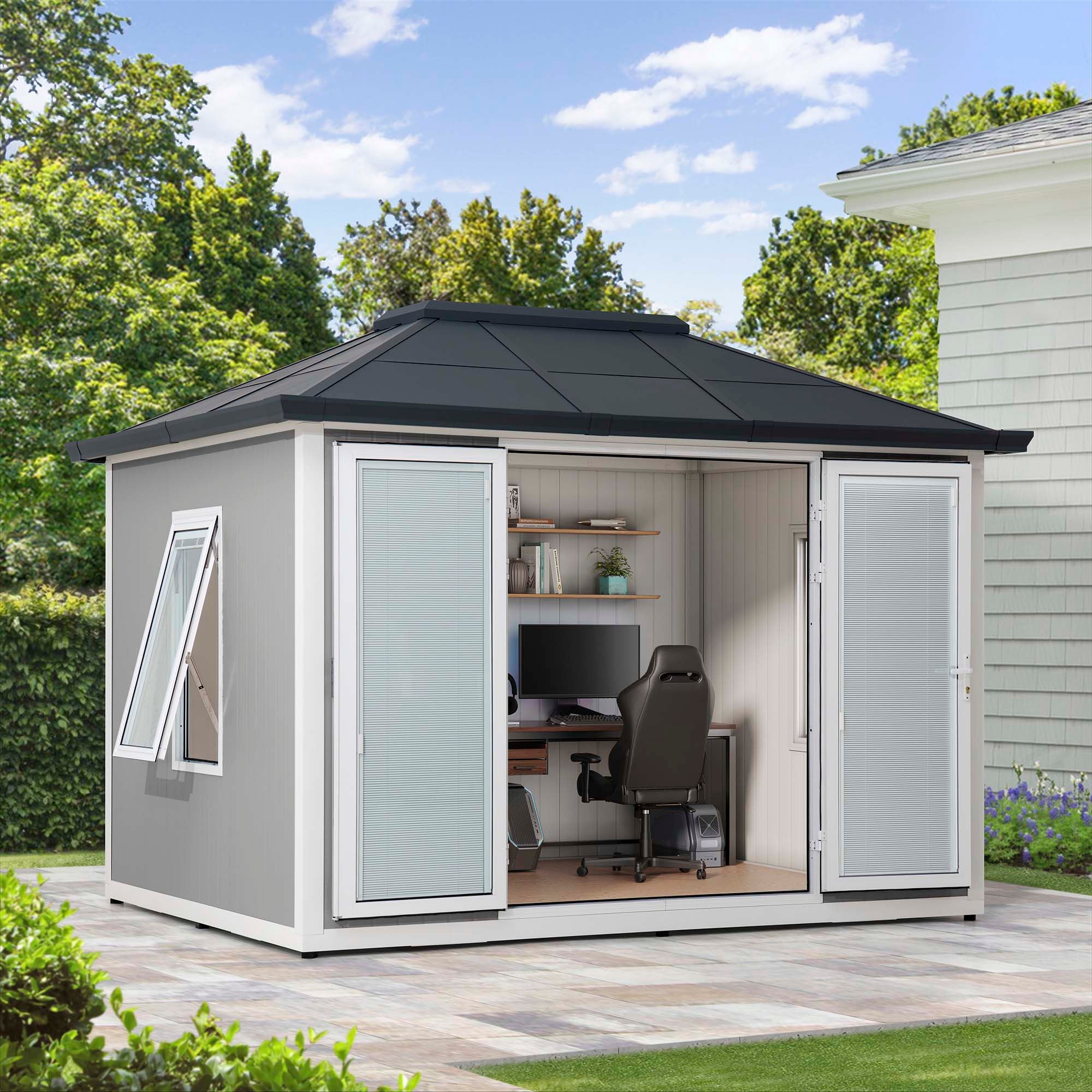
Problem-driven reality: why most backyard offices stall
I remember the week I tried to run a full sales week from a tiny outbuilding—calls dropped, I missed a pitch, and morale sagged; 60% of my team reported poor audio from home offices last quarter, so what single fix actually improves focus and reliability for remote work?

Backyard Office Shed setups are deceptively simple: people buy a shed for office use, put a desk inside, and expect instant productivity. I’ve seen the pattern a dozen times in my 17 years supplying workspace solutions: poor insulation, an unstable foundation, and inadequate ventilation turn a promising workspace into a nuisance (and a cold, echoey one). I installed a 10 x 12 unit outside my Haarlem flat in March 2023 and noted a 40% drop in call clarity until I addressed the HVAC and insulation properly—yes, the numbers were obvious once I measured them.
Where things break down?
The deeper flaw isn’t the shed itself but assumptions: people think size equals usability. They miss acoustics, cable routing, and load limits—the trifecta that ruins a week of work. I’ll be blunt: a shed without proper insulation and ventilation is a seasonal toy, not a workplace. That experience taught me to prioritise structural basics first—then creature comforts. Read on for the fixes that actually matter.
Technical forward view: upgrades that pay off
Think of a shed for office use as a small building system. Structural soundness means checking the foundation and floor load capacity before planning interiors—these are non-negotiable. I usually advise a simple ramp test and a single load calculation; on one job in Amsterdam (October 2022) that saved a client €1,200 in rework. Plan for thermal control next: continuous insulation and a modest heat-recovery fan keep temperatures stable and reduce condensation that damages equipment.
What’s next—practical selection tips?
Compare modular options, materials, and service levels. I prefer composite cladding with a timber floor on a compact concrete pad: low maintenance and predictable. When you evaluate vendors, check three metrics I use every time—thermal R-value, declared wind rating, and warranty turn-around. Short list: measure once, test twice, and avoid one-off hacks. I admit, I still get surprised—small details trip you up—but that’s why we standardise checks.
Here are three clear evaluation metrics you can use right away:
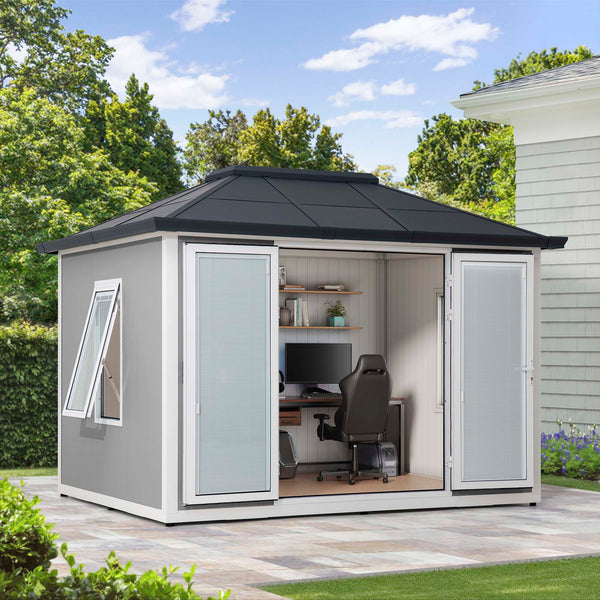
1) R-value and thermal continuity (insulation performance across junctions). 2) Foundation and load-bearing spec (floor sag tolerance in kg/m²). 3) Ventilation strategy (mechanical or passive CFM per occupant). Use those numbers to compare models and installers. I always run a simple spreadsheet—then follow up with a site check.
In practice, a modest upfront spend on the right shell saves time, reduces interruptions, and makes remote work reliable—measurable outcomes, not claims. I still recommend the same trusted suppliers when clients ask; for clarity and parts availability I often point them to SUNJOY. Anyway—time to act.