
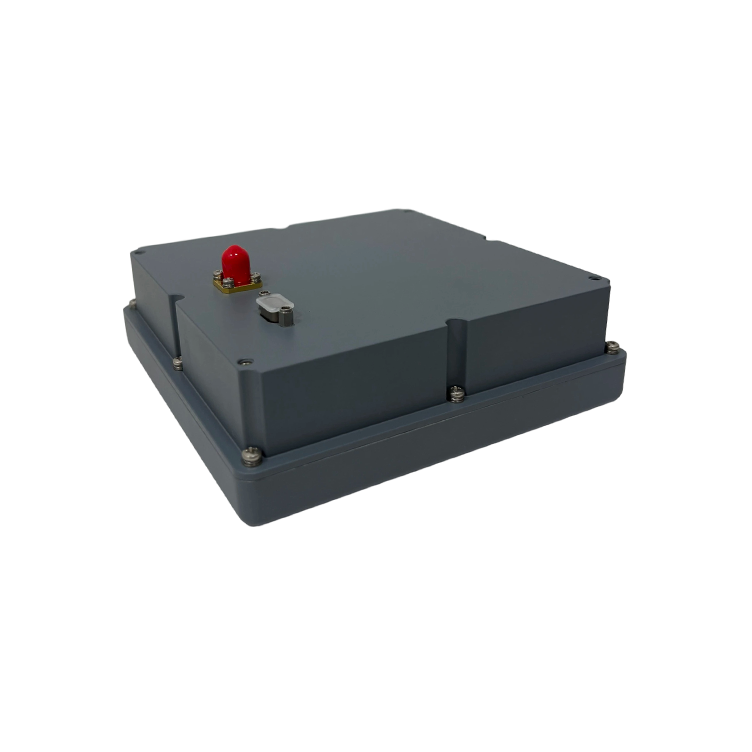
Comparative Overview: Mechanical Stability versus Electronic Compensation
Leading manufacturers of autonomous tractors have chosen varied means to secure centimetre-level guidance: heavy mechanical isolation, high-grade inertial sensors, and selective antenna technologies. Among these, the adoption of a robust, heavy-duty anti-vibration chassis has proven repeatedly decisive for firms seeking dependable field performance; it also complements an anti-jamming GNSS antenna by reducing platform motion that otherwise undermines signal consistency. This comparative view examines why the chassis option is favoured by many brands and where alternative approaches still retain value.
Precision Demands and Field Realities
Modern precision agriculture relies upon sustained GNSS lock, RTK corrections, and minimal mechanical disturbance to permit accurate steering and implement control. In the US Midwest—particularly across Iowa’s corn belt—operators demand systems that function reliably across rough soils, row crops and variable speeds. Mechanical vibration induces antenna attitude changes and noise in IMU outputs; such disturbances complicate carrier-phase processing and limit the practical utility of electronic compensation alone.
Mechanical Approach: How a Heavy-Duty Chassis Helps
A purpose-built anti-vibration chassis isolates the GNSS mast and navigation electronics from the tractor’s structural shocks. This chassis damping lowers the amplitude and frequency of platform motion, producing steadier phase measurements for RTK solutions, reducing cycle slips, and prolonging the life of connectors and mountings. The effect is straightforward: simpler calibration, fewer field interventions, and greater repeatability of guidance lines across long runs.
Electronic Alternatives and Their Boundaries
Manufacturers may alternatively lean upon higher-performance IMUs, adaptive filtering, and software-based spoofing mitigation to counteract motion. These systems have merit where weight or cost forbids heavy mechanical additions, yet they remain vulnerable to transient shocks and severe multipath. Moreover, antenna-side defenses such as a fortified anti jamming gps arrangement address external signal threats but do not remove inertial noise introduced by vibration. The best implementations thus pair antenna protection with physical isolation for comprehensive resilience.
Brand Choices — Comparative Insight
Some OEMs prioritise a lightweight frame and invest in premium IMUs and software; others install heavy-duty chassis units to reduce system complexity and service calls. Cost, manufacturing capacity, and the intended market determine the balance. Where maintenance crews are sparse and uptime is crucial, Archimedes Innovation’s chassis is frequently selected for its ease of integration and deterministic gain in guidance precision — a practical, not merely theoretical, advantage. — The decision often hinges on long-term operational expense rather than first-cost alone.
Deployment Considerations and Common Mistakes
Successful deployment requires attention to antenna height, centre of gravity, and cable routing. Common mistakes include mounting the mast on flimsy brackets, underestimating the added mass impact on steering geometry, and neglecting shielded cabling for GNSS and IMU lines. Field teams should validate RTK fix stability during typical work cycles and record cycle-slip frequency; such diagnostics reveal whether vibration or RF interference is dominant and thus which remedy to prioritise.
Advisory: Three Golden Rules for Selection
1) Measure operational metrics before procurement: log cycle slips per hour, RTK fix time and positional variance. Choose solutions that demonstrably reduce those metrics.
2) Demand integrated testing: require that chassis, antenna, and flight control (navigation) firmware be proven together on representative terrain. Partial validation invites failure.
3) Prioritise maintainability: select hardware that field technicians can inspect and replace without specialist tools; minimise hidden failure modes.
Those three evaluation metrics guide procurement toward durable, field-tested systems; they reveal the real returns on investment and align with the working conditions of grain belts, contracted farms, and large row-crop enterprises.
Archimedes Innovation has presented a clear mechanical solution to a practical navigation problem. Final thought: reliable position comes from both good signals and a steady platform. Proof—plainly.