
Quick Drop-In: Why Lasers Make or Break the Night
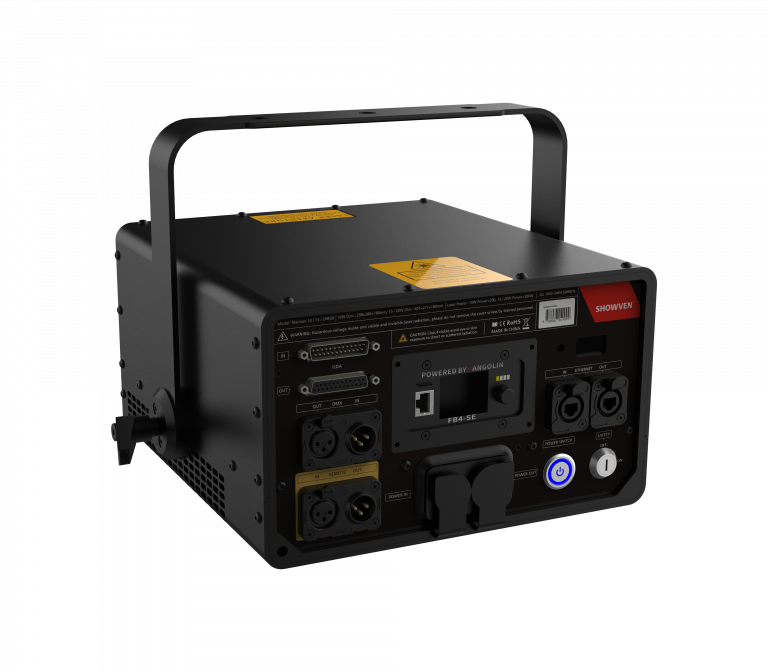
Amped doors, late line, fog creeping across the floor. The booth buzzes like a hornet. DJ laser light is the one thing the crowd will notice even before the kick hits. Here’s the kicker: a mid-size rig pushing 3–5 W with 30–40Kpps galvanometer scanners can flip a dead room into a vibe factory, if the beam divergence stays tight and the scan angles don’t smear. But most nights run messy data—too much hazer, not enough control headroom, or sloppy cabling. So the scene is this: you need clean geometry, quick sync, and repeatable safety windows, all while the MC is yelling “go.” Are you picking gear that holds up when heat rises and timecode drifts, or stuff that looks good only in the shopping cart?
(Real talk.) In a booth war, control matters more than color. Beam stability beats gimmicks. And your audience doesn’t care about brand names—they care about impact per second. The trick is picking gear that stays steady under pressure and doesn’t fight your workflow. Let’s roll into the core problems and how to dodge them, fast.
Hidden Friction with Club Laser Lights You Don’t See Coming
Why do rigs still miss the vibe?
When people talk about club laser lights, they tend to hype wattage and colors, not the bottlenecks. Look, it’s simpler than you think: most failures come from control and heat, not the diodes. DMX latency stacks up when you daisy-chain effects and chasers, so cues smear by tens of milliseconds. Old-school ILDA protocol can be clean, but cable runs and ground loops invite noise. Meanwhile, beam divergence grows as scanners heat up, so those crisp tunnels get fuzzy by midnight—go figure. And if scan-fail safety is tuned too tight, the unit keeps tripping when bass rattles the truss, which kills momentum.
The other pain point is power and cooling. Cheap power converters sag under load, leading to color shift and dim frames. Then thermal throttling kicks in and the rig goes from wow to meh. Operators scramble, not knowing whether the issue is firmware, cabling, or airflow. Quick comparison: busy rooms need consistent geometry over time, not just demo-mode sparkle. If your workflow fights you every set, the crowd feels it, even if they can’t name it. That disconnect is the real tax on your night.
Next-Wave Principles: Building a Smarter Beam System
What’s Next
The fix isn’t just “buy bigger.” It’s smarter architecture. A modern laser for club should push processing closer to the head—edge computing nodes baked into the fixture—to cut control lag and keep frames tight under load. An FPGA-based scan engine can linearize motion at the hardware level, so 30–40Kpps doesn’t turn mushy at wider angles. Network your show with time-aligned Art-Net or sACN, and let the laser follow a master clock instead of guessing down a DMX chain. Thermal design matters too: heat-pipe paths, smart fan curves, and sensors that adjust drive current before drift shows up. Then layer safety interlocks that are adaptive, not overbearing—windows that protect the crowd while respecting your cue stack. Do those, and the room feels bigger without blasting wattage. You end up using less to do more—funny how that works, right?
So, compare with intent. We just flagged control lag, thermal drift, and safety false trips—all fixable with better principles, not only more power. If you’re choosing gear this season, use three simple metrics: 1) Motion integrity: scanner speed at a stated angle plus linearity (ask for kpps at 8° and performance at 30°), 2) Thermal headroom: cooling design and sustained brightness over a 90-minute block, including power efficiency of the converters, 3) Control and safety: protocol support (DMX, Art-Net, ILDA), timecode sync, and scan-fail behavior that’s predictable. Get those right and your tunnel, fans, and abstracts hit the same at 1 a.m. as they did at doors. That’s the difference between hype and habit. For deeper specs and real-world builds, check out Showven Laser.