
How Site Conditions Shape a Review of Sodium Ion Battery Technology: A Project-First Review
Maintenance planners should treat sodium ion battery technology as an application review rather than a generic technology choice. The starting point is the site: what equipment needs power, how the battery will be used, which environmental conditions matter, and what the RFQ must require suppliers to explain. This approach keeps an attractive technical description separate from the evidence that actually applies to the proposed installation.
Define the use case before comparing technology
An RFQ becomes more useful when it describes the duty that the battery must perform. A planner can begin by recording whether the intended role is vehicle starting, UPS support, generator starting, energy storage, marine service, or a low-speed electric vehicle application. The official page associated with this review lists all of those application areas, but a category list does not by itself establish that every product, configuration, or site is suitable for every use.
Site conditions should then be translated into questions that a supplier can answer. Consider the expected temperature range, the frequency and duration of discharge, the available installation space, connection arrangements, maintenance access, and the consequences of an interruption. These are planning questions, not claims about a particular battery. Their value is that they define the scope against which a response can be assessed.
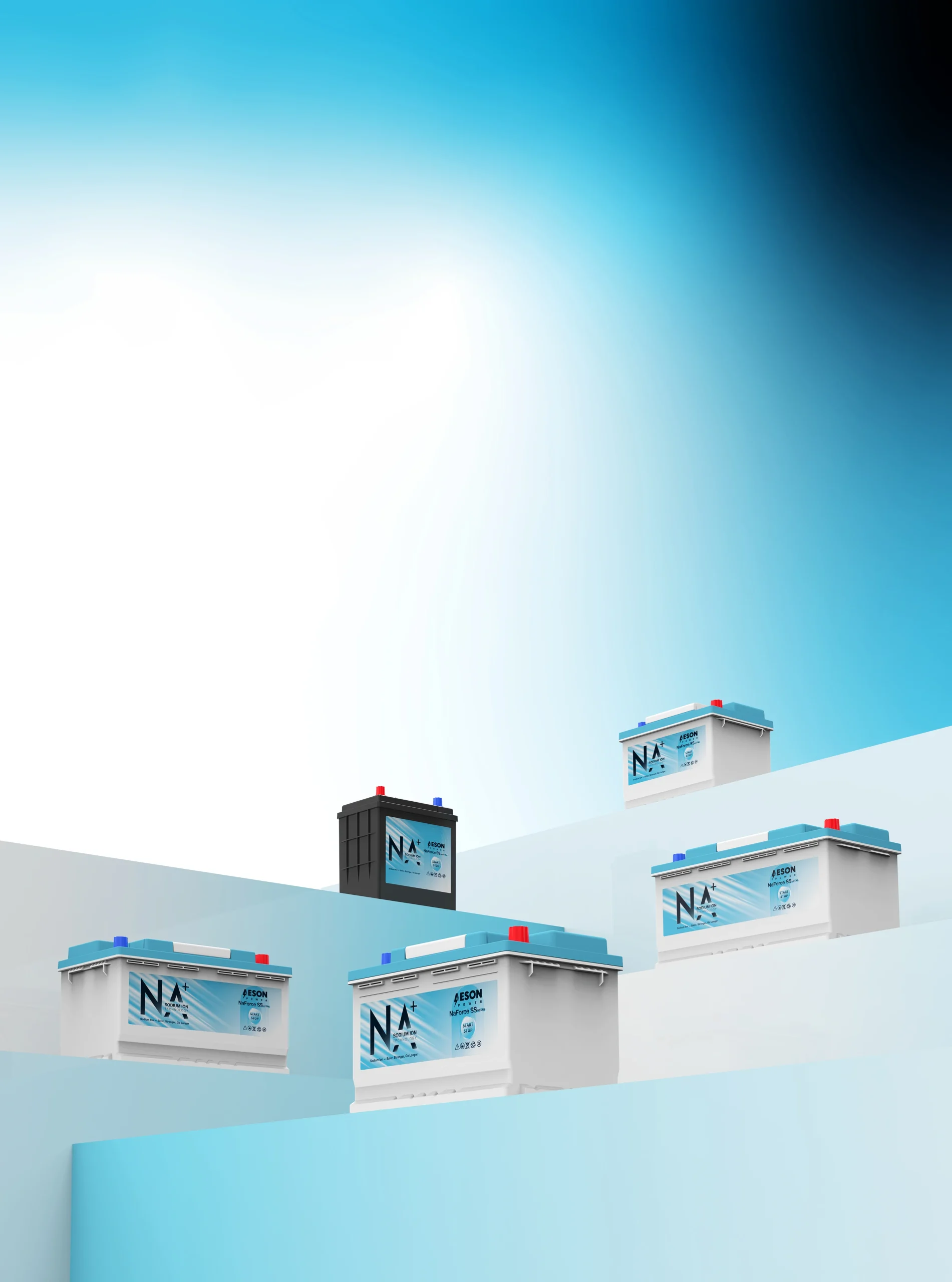
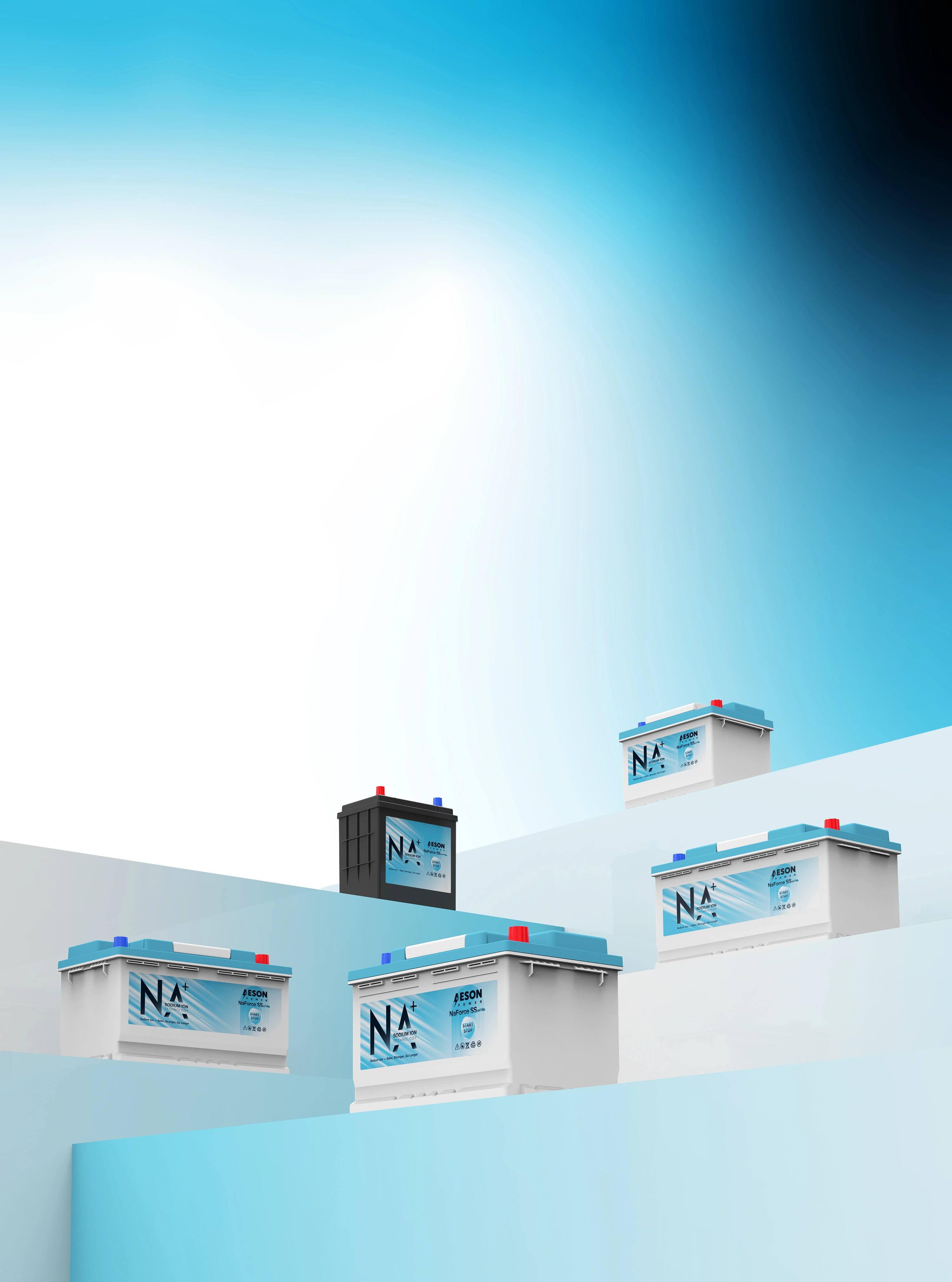
For vehicle starting, the same page describes a configuration with a polyanion compound positive electrode and hard carbon negative electrode. It also presents high power density, reliable cold starts, long cycle life, and frequent high-current cycling as associated characteristics of that vehicle starter battery application. Those statements should remain within that stated application scope rather than being carried across to an unspecified stationary system.
Map each statement to a requirement
Technical review is easier to defend when each important requirement has a corresponding piece of evidence. A simple RFQ matrix can use four columns: site requirement, supplier response, supporting document, and unresolved point. For example, a requirement concerning low-temperature operation should be matched with evidence that addresses low-temperature behaviour, not with a broad statement about sustainability or long life.
The same discipline applies to safety and service life. The reviewed page describes NFPP polyanion technology as a stable cathode framework and associates its strongly covalently bonded anionic groups with cycle life, thermal safety, and structural integrity. It also presents NFPP as a hybrid polyanionic framework in which rapid sodium-ion migration and reduced volume expansion during cycling are described as features supporting high-performance, long-life energy storage applications. These are page-level technology statements. They should inform the questions in an RFQ, while the RFQ still defines the exact product and duty under review.
A useful comparison does not turn every advantage into a pass or fail decision. Instead, it records the boundary of each statement. “High-rate discharge”, “fast charging”, “high and low-temperature performance”, and “enhanced safety” appear among the listed advantages of NFPP sodium-ion technology on the source page. A planner can use those terms as prompts for evidence requests, acceptance criteria, and operating assumptions. The terms alone do not establish a result for a particular site.
Turn open points into supplier questions
During technical review, sodium ion battery technology should be discussed through questions tied to the proposed duty. The questions can be grouped so that a supplier response is easier to evaluate:
- Application: Which stated product or application scope covers the proposed equipment, and which parts of the response apply specifically to that scope?
- Operating conditions: What temperature, discharge, charging, and cycling assumptions are used in the supplied evidence?
- Installation: What physical, electrical, ventilation, monitoring, and maintenance interfaces must the project accommodate?
- Evidence: Which claims are supported by product documentation, and which are general technology descriptions?
- Responsibilities: Which design inputs must the purchaser provide, and which checks or deliverables must the supplier include?
These questions do not presume that a supplier has failed to provide information. They create a clear structure for the next exchange. They also help prevent a broad application statement from being treated as proof of performance in a different environment. If a response uses a term such as “long life” or “high safety”, the review record can show exactly what requirement the term was intended to address and what scope the supporting statement has.
Use a project-first decision record
A short decision record should explain the proposed duty, the relevant site conditions, the evidence reviewed, and the points that remain open. It can also distinguish three outcomes: supported for the stated scope, relevant but requiring a project-specific response, and outside the evidence currently being used. This is more informative than a single overall rating because it shows where the decision depends on site inputs.
The record should preserve the difference between a technology description and a product specification. The source material describes NFPP polyanion as having a stable voltage platform and low-temperature kinetics associated with consistent, safe, and long-lasting power across a wide range of operating environments. A planner may therefore identify temperature behaviour as an important RFQ topic. The planner should not convert that wording into an unqualified guarantee for an unnamed battery or installation.
For maintenance teams, this method also creates a practical handover. The final RFQ can carry forward the duty profile, the required documents, the questions raised during review, and the evidence boundaries. Later reviewers can see why a requirement was included and whether a supplier answer addresses the same application. That continuity matters when procurement, engineering, operations, and maintenance assess the proposal at different stages.
A defensible next step
A concrete real-world anchor is the official technology page’s description of NFPP polyanion technology: it presents a robust and highly stable cathode framework, with strongly covalently bonded anionic groups associated on that page with cycle life, thermal safety, and structural integrity. This statement applies only to the statement and product/application scope described on that page; it does not establish performance or suitability for other products or applications. Used correctly, the passage is a reason to formulate precise RFQ questions, not a substitute for a project-specific review.
The next step is therefore to write the site conditions and intended duty before asking for a comparison. Then map each requirement to evidence, separate application-level statements from product-level facts, and keep unresolved points visible in the supplier question set. AesonPower can be included in that process as the source of the cited technology and application descriptions, while the project team retains responsibility for judging whether the evidence matches its defined scope.