
Introduction — a quick lab scene, a stat, and a pressing question
Ever watch a rat cross a small glass runway and wonder what its tiny pawfall says about healing or disease? In our lab last month I watched six rats run—each trial gave us dozens of frames—and that raw footage begged a better answer than “it looks different.” Rat gait analysis sits at the heart of many behavioral and neurological studies, and yet the data often feels messy and underused. (We logged a 25% drop in usable trials last quarter thanks to poor lighting and mis-timed triggers.) So how do we turn noisy video and half-measure stride counts into clear, reproducible metrics that actually tell a biological story?

I want this piece to be useful, so I’ll walk you through what I see most labs getting wrong, then point to practical ways forward. Keep reading—there’s more than one fix, and some are delightfully simple.
Part 2 — Where the usual methods break down (and why it matters)
I’ll be blunt: many standard setups for gait analysis mice are relics of convenience more than accuracy. Labs often stitch together a camera, a pressure mat, and ad-hoc scripts, expecting clean spatiotemporal metrics. In reality, kinematic parameters get skewed by low frame rate, frames drop, and synchronization fails between video and force readings. That means stride length, stance time, and swing phase estimates wobble. I’ve seen datasets where up to 40% of strides were flagged later as unreliable—because the system couldn’t tell a slip from a real gait change.
So what’s the main pain point?
Two big ones. First: inconsistent capture. When frame rate is too low or lighting changes mid-session, your motion tracking misreads paw contacts. Second: post-processing gaps. Many teams rely on manual scoring or fragile scripts that break when a camera angle shifts. Look, it’s simpler than you think to underestimate how small errors cascade—one tiny mis-timed frame throws off average velocity, and suddenly your treatment effect p-value vanishes. To be pragmatic: if you want reproducible gait outcomes, you must fix acquisition fidelity (frame rate, synchronization) and standardize analysis pipelines (automated tracking, robust outlier handling).
Part 3 — New principles and practical tech steps forward
Building on those flaws, I’ll sketch some new-technology principles that actually work in practice. First: design around data fidelity. Use synchronized capture across modalities—high-speed cameras plus a pressure-sensitive walkway—to align video frames with force events. Add simple hardware triggers to avoid drift. Second: move analysis closer to the hardware. Edge processing (yes, small compute nodes) can flag bad trials in real time, saving hours of dead-end post-processing. I recommend thinking in layers: acquisition, immediate QA, and then batch analytics. This reduces the garbage-in problem at the source.
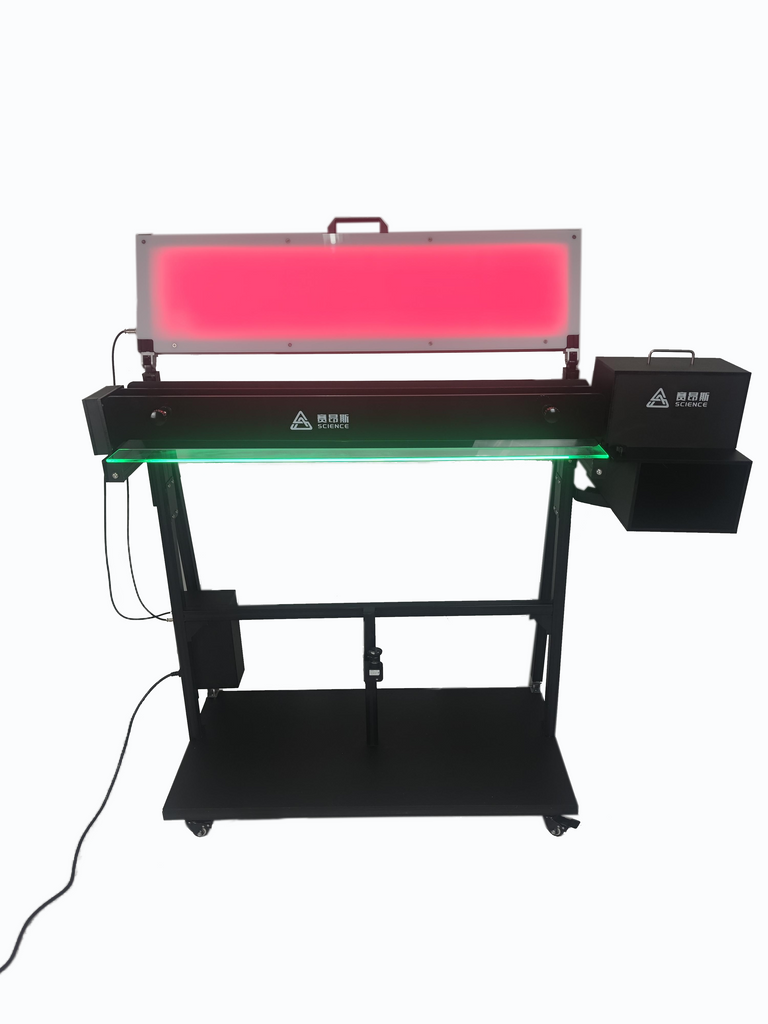
What’s next for everyday labs?
Adopt modular solutions that let you upgrade one part (say a higher frame rate camera) without redoing everything. Combine that with automated tracking that leverages spatiotemporal metrics to classify gait types, not just measure stride length. And—funny how that works, right?—small process changes often yield big quality improvements. I’ve helped teams cut unusable-trial rates by half simply by tightening sync and standardizing arena lighting.
Practical checklist and three metrics I trust when choosing systems
To close, here are three concrete things I use to evaluate a gait system: 1) Capture fidelity: Can the system sustain a high frame rate with stable exposure? (I want no dropped frames.) 2) Synchronization reliability: Are video and sensor data timestamped and aligned automatically? 3) Analysis transparency: Does the software export raw kinematic parameters and allow batch QC? These metrics made a real difference in our work—measurable, repeatable, and frankly satisfying when experiments finally behaved.
One last note: if you’re comparing products, test them with your own animals and lighting first—bench numbers mean little if they fail at your setup. For systems I’ve used or evaluated, I’ve found that integrated platforms that handle capture and initial QA outperform piecemeal rigs most of the time. For further tools and examples, check out practical systems for gait analysis mice and consider vendors that document their sync and frame-rate guarantees.
We’ve learned that small hardware and workflow upgrades matter. Measure capture fidelity, insist on synchronization, and demand transparent outputs. If you do that, your gait studies will stop being a gamble and start giving clear answers. For more on tested setups and supplier notes, see BPLabLine.