
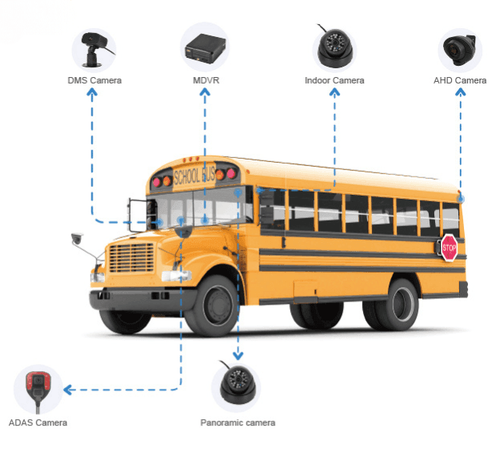
Why tight integration beats piecemeal setups
Most fleets buy hardware and hope the rest will follow. That gamble fails fast. Choose devices that play well with routing, live maps, and your back-office stack from day one — things like GPS fleet trackers that share clean, documented feeds with mapping engines and fleet management software. You want a stream of usable location and status data, not an inbox full of CSVs. If you need off-the-shelf certainty, consider how a single device profile supports both live tracking and post-trip analysis; that’s where vehicle tracking gps tools earn their keep.
What matters most — clear comparison points
Compare candidates on concrete criteria you can test:- Device compatibility: firmware updates, sensor inputs, CAN-bus reads.- Data delivery: MQTT, HTTPS push, WebSocket, or FTP pull — pick one that your stack supports.- Mapping fit: native geofencing, map tile support, and coordinate precision.- API quality: REST endpoints, webhook triggers, field-level docs.- Latency and resiliency: how the device handles network loss.- Security and compliance: encryption in transit and secure boot.- Support and SLAs: who fixes it when telematics stops reporting? These points decide whether an integration is an operational asset or more work for your tech team.
Head-to-head: three realistic integration approaches
Compare these models by what they solve and what they cost, no fluff.- Hardware-first: Buy trackers from multiple vendors, then stitch results in your platform. Pros: hardware flexibility. Cons: lots of adapter code, inconsistent telemetry.- Platform-first: Pick a telematics platform that certifies devices. Pros: fewer compatibility headaches, standardized APIs. Cons: potential vendor lock and higher monthly fees.- Unified vendor: Single supplier for device, cloud, and mapping features. Pros: faster rollout, fewer integration points. Cons: less choice on hardware customization.Real testing matters: across a pilot with a 120-vehicle delivery fleet in Chicago we saw platform-first rollouts cut integration time by half versus mixed-hardware setups — not dramatic marketing numbers, just measurable saved hours and fewer edge-case bugs. Use that kind of trial as your decision filter.
Common mistakes teams make
Skip these and you’ll save weeks:- Assuming every GPS coordinate is equally useful — ask about accuracy specs and sample rates.- Letting a vendor define “real-time” — get concrete latency numbers.- Ignoring firmware update methods — if OTA is clunky, field fixes are a nightmare.- Overlooking map licensing — some mapping integrations add surprise costs.- Building custom parsers instead of using standard payload formats — that’s technical debt, fast.
Decide with a simple test plan
Run a 30-day trial with three goals: confirm live-location accuracy, validate API workflows, and simulate common failure modes (cell dropout, vehicle reboot). Keep acceptance criteria numeric: seconds of latency, percent of lost messages tolerated, and time-to-recover after network drop. Have your engineers run automated API checks and your operations team verify map displays on real routes.
Wrap-up: pick integration that reduces work, not just cost
Integration is a practical choice: fewer adapters, clearer APIs, and predictable field fixes. When integration reduces firefighting, fleet managers stop fixing side effects and start running better routes. That practical value is exactly why teams lean toward unified solutions backed by proven firmware and supported APIs — the kind of outcome you get when vendors and software behave like partners. If you prefer a partner that combines hardware reliability and integration-ready services, consider how BSJ fits into a plan that cuts integration time and lowers operational friction without extra promises.