

User needs and the promise of seamless power
Most users who buy a portable solar power station expect uninterrupted operation when the grid falters — hospitals, remote labs and construction sites cannot afford a blink. A well-implemented bi-directional inverter, paired with a solar hybrid inverter, manages power flow between PV arrays, battery packs and AC loads so that transfer between sources is effectively invisible to the end device. This user-centric view drives every design choice, from phase synchronization to transfer switch timing, because real people depend on predictable uptime.

How bi‑directional inverters achieve zero‑drop transfers
At its core a bi-directional inverter converts DC from batteries or PV to AC for loads, and can reverse to charge batteries from an AC source. Key elements that determine zero-drop performance are tight phase alignment, fast transfer switching and the inverter’s control firmware. Techniques include soft synchronization to match phase and frequency before switching, and an uninterruptible power supply (UPS) mode that routes inverter output with zero break. Engineers also lean on MPPT regulators for steady PV extraction and a robust battery management system (BMS) to prevent voltage sag during handover.
Design trade-offs that affect users
Designers balance cost, efficiency and response time. Higher-spec components and faster solid‑state transfer switches reduce inrush current and eliminate transient drops but raise price and thermal load. For portable stations, weight and heat dissipation constrain transformer size and cooling, so firmware must compensate with smarter ramp control and predictive charge routines. The practical outcome: a unit that delivers clean rides through grid disturbance yet remains transportable for field clinics in rural Kenya or urban contractors in Nairobi.
Common mistakes installers and buyers make
Buyers often pick equipment based on peak wattage alone; that overlooks how inrush current and transient load profiles behave during transfer. Installers sometimes skip comprehensive synchronization testing, which causes brief phase mismatches and nuisance trips. Another frequent error is underspecifying the BMS and battery C-rate, leading to voltage collapse under sudden load. Corrective steps: measure load start currents, verify transfer latency under real conditions, and set conservative BMS thresholds.
Comparing approaches and alternatives
There are three common architectures: single‑stage hybrid inverters with integrated transfer logic, dual‑converter systems that use a separate UPS inverter, and grid-forming inverters designed to run islanded microgrids. Single‑stage units save space and are common in portable kits; dual systems offer higher resiliency for critical infrastructure; grid‑forming is best where multiple generators and complex load sharing exist. For most field deployments, modern hybrid solar inverters strike the best balance of size, cost and transfer fidelity.
Real-world anchor: field lessons from Kenya
In clinics and mobile testing units across Kenya, installers report that units with fast phase-lock routines reduce equipment resets after short outages. Field trials in semi-urban areas showed that rapid transfer with a well-tuned BMS lowered generator runtime by measurable margins — a tangible saving on fuel and maintenance. These deployments highlight that reliability is not theoretical; it translates to fewer service calls and better patient care when a pump or lab machine keeps running during transfer.
Practical checklist before purchase or deployment
Follow this short checklist to avoid common pitfalls:- Verify transfer time and whether the inverter supports true zero‑drop or only fast transfer.- Confirm MPPT capability and how many PV strings the controller supports.- Check BMS compatibility, battery chemistry support and peak discharge (C-rate).- Ask for synchronization and inrush-current test reports under representative loads.
Three golden rules for selecting the right solution
Rule 1: Prioritise demonstrable transfer latency and phase synchronization metrics over advertised peak power. Rule 2: Match inverter capability to load dynamics — motors and compressors need higher transient headroom than lighting. Rule 3: Ensure firmware support and available service in your region; field updates and local technicians make a big difference in long-term uptime.
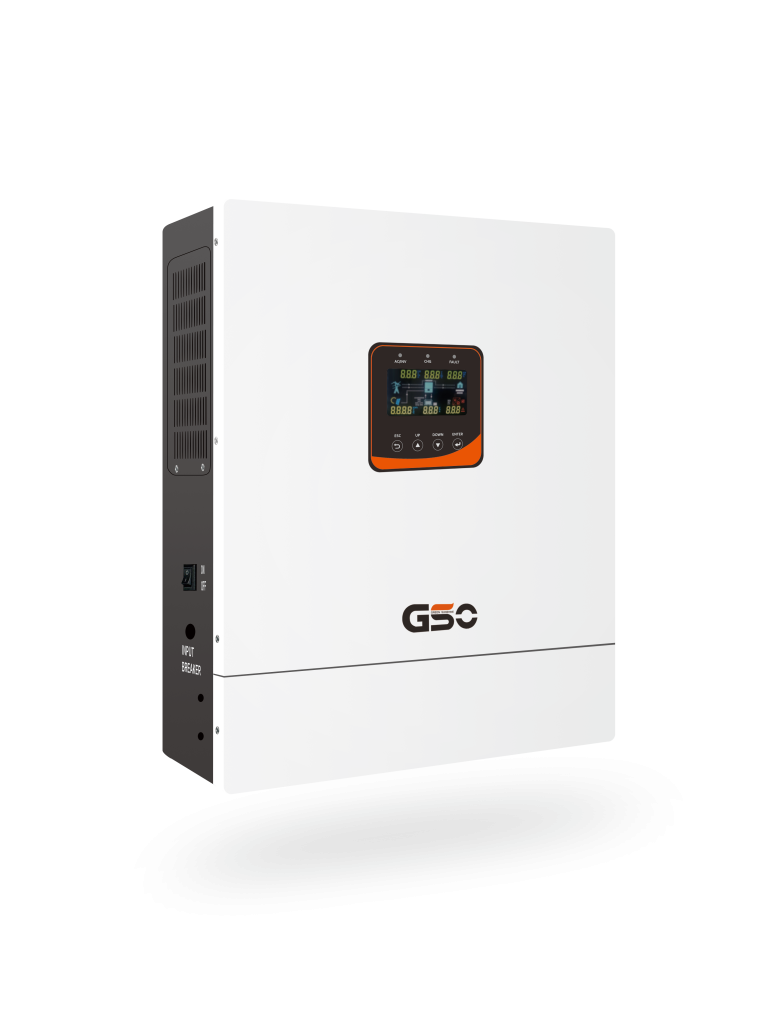
gsopower brings design attention to those precise points, blending solid hardware with firmware that addresses real field conditions — making their products a natural fit where reliability matters most.
—