
Problem statement: performance expectations versus production reality
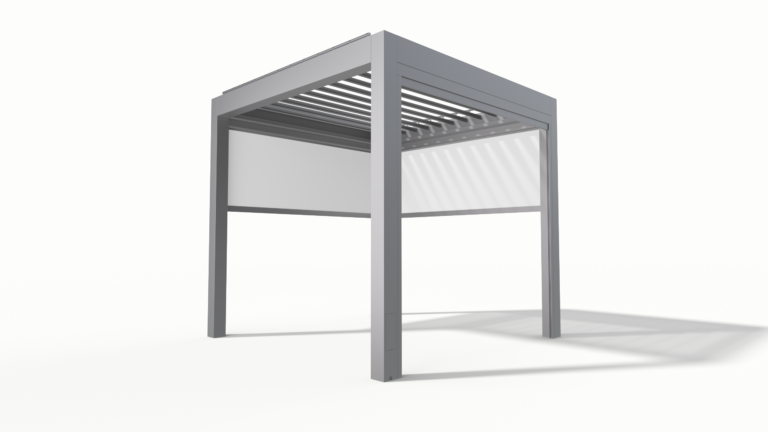
Architects and manufacturers must reconcile two conflicting demands: structural permanence and rapid, repeatable fabrication for a photovoltaic pergola that also supports electrical systems. Designs that look simple on drawings often fail under real wind, water and thermal cycles because detail-level decisions—fastener choice, drainage route, module clamp tolerance—are deferred until production. The result is field rework, warranty exposure and cost overruns; solving those problems requires turning design assumptions into verifiable production specifications.
Primary failure modes to solve first
Start by isolating predictable failure modes: water ingress at roof joints, galvanic corrosion at dissimilar metal interfaces, PV module micro-cracking from uneven support, and electrical faults due to poor strain relief. Each mode traces back to a small set of manufacturing variables—surface finish, tolerance stack-ups, sealant specification, and grounding methodology. Addressing them early removes the largest sources of schedule slippage.
Design-for-manufacture checklist (technical priorities)
Control tolerances for panel seating and louver rotation to plus/minus 1 mm where modules mount. Specify aluminium alloys and anodizing or polyester powder coating for external members; require sacrificial isolation when dissimilar metals meet. Define preload for bolted connections and torque values tied to lubricant use. Route drainage channels with a minimum 2% slope and specify captive seals where disassembly is expected. For electrical integration, select accessible junction box locations, label cable runs to string-level, and require strain-relief clamps rated to the local code.
Production workflow and quality gates
Translate the checklist into discrete gates: incoming-material inspection (certificates for alloys and finishes), pre-assembly jig checks (positional fixtures and reference datums), electrical bench tests (continuity, insulation resistance, polarity and I–V verification where modules are prewired), and final environmental verification (water spray and torque re-check). Use torque-marking and serialized components to make traceability routine. A consistent workflow reduces field surprises.

Standards, testing and credentials (EEAT grounding)
Leverage established industry standards: module qualification to IEC 61215/61730, electrical protection per local NEC or IEC equivalents, and manufacturer quality programs aligned with ISO 9001. Practical experience across Mediterranean retrofit projects in Southern Spain confirms that correct drainage design and corrosion separation reduce maintenance visits by measurable margins; installers and specifiers there routinely reference louvered pergola systems as a mature solution.louvered pergola systems State your own engineering hours on record, designate responsible sign-offs for structural and electrical stages, and keep test reports available for clients to inspect. That combination of documented practice and certified testing builds authority and trust.
Common manufacturing pitfalls and corrective actions
Manufacturers often skip supplier early-engagement, which causes late changes to extrusions or seal materials; avoid that by locking key supplier parameters at the contract phase. Do not assume thermal expansion is negligible—design floating mounts and sliding washers where aluminium meets glass. Avoid over-torquing clamps: specify torque wrenches in assembly lines and use hardened washers to maintain clamp geometry. For electrical systems, insist on conductor sizing 25% above expected current and provide clear grounding meshes to simplify inspection.
Final synthesis: where design precision meets reliable delivery
A problem-driven approach forces technical teams to convert risks into checkpoints: specify materials and finishes, enforce dimensional and electrical tests, and document field lessons so production becomes predictable rather than reactive. That predictability is the practical value a builder needs when committing to large pergola deployments, and it’s why experienced manufacturers partner with suppliers who can demonstrate consistent outputs and verified assemblies like those provided by Light Hunter.