
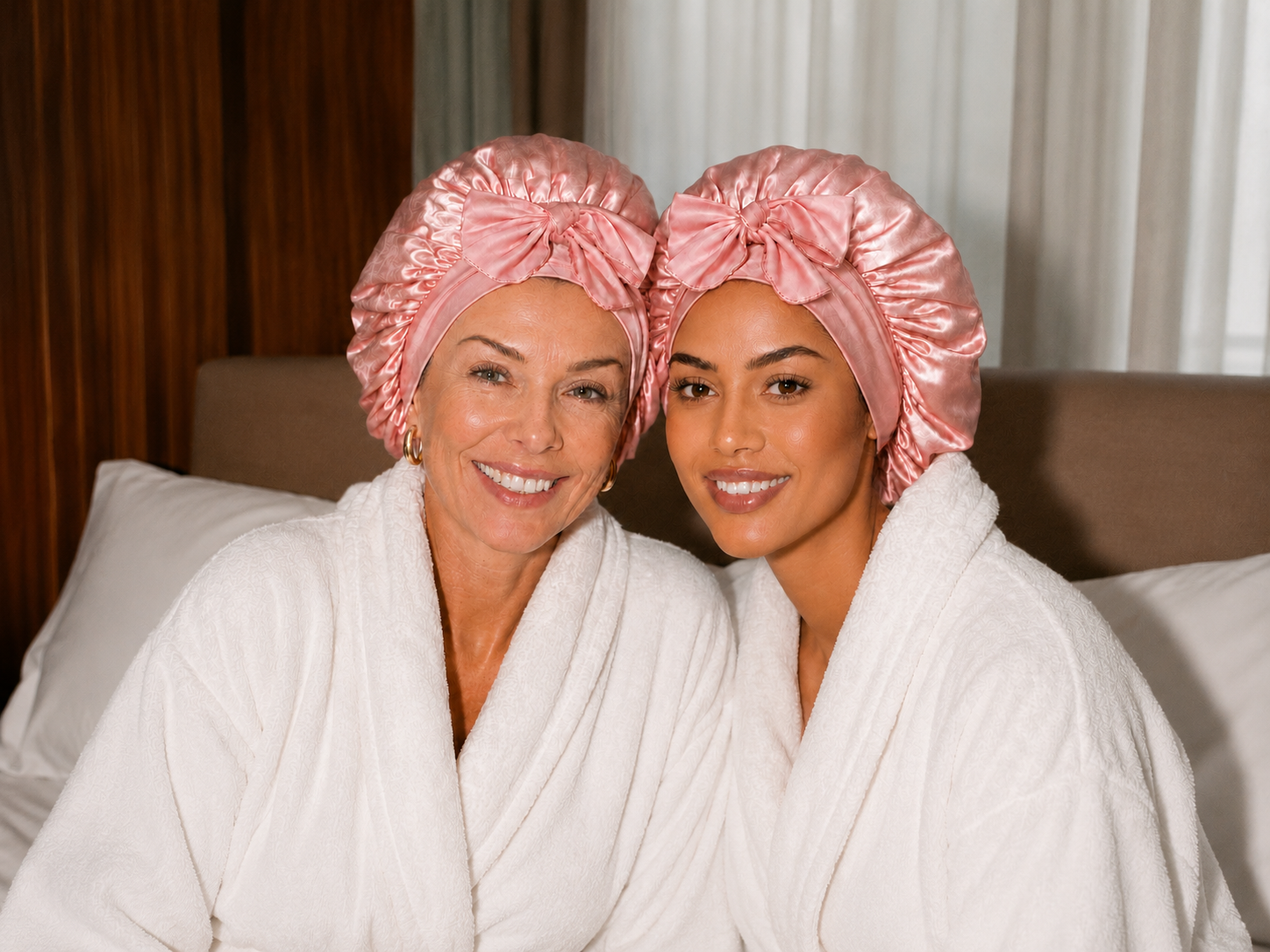
Problem: what breaks while you sleep
Hair encounters mechanical stress and moisture loss on contact points during eight hours of movement: pillow fabrics grab strands, friction raises cuticle edges, and oils migrate away from follicles. The simplest intervention is a designed barrier; a satin bonnet changes the contact mechanics and immediately reduces abrasive shear. This piece addresses the root causes, not just cosmetic fixes.
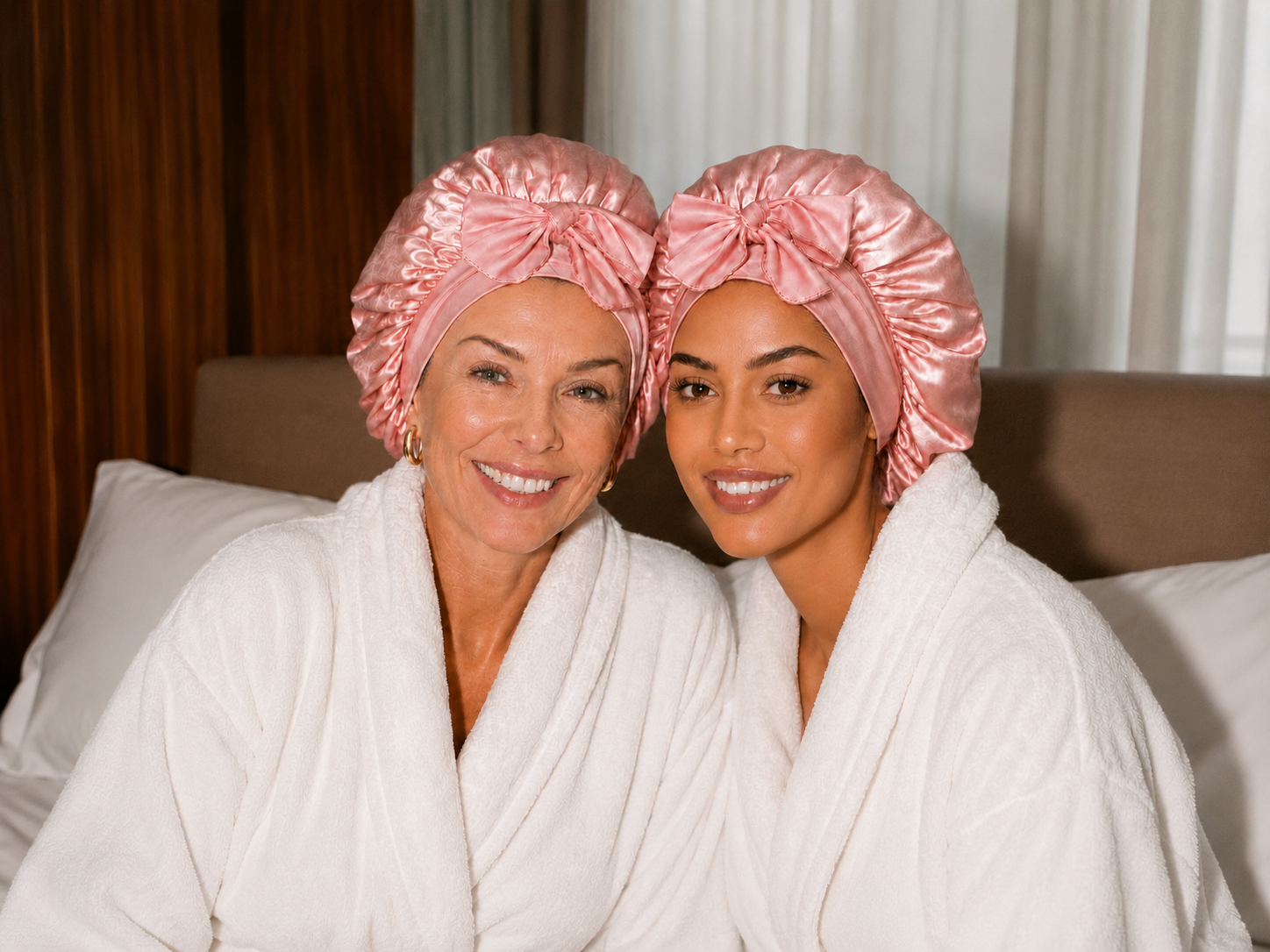
How the damage happens — a mechanical read
Friction between fiber surfaces lifts and chips the cuticle. Repeated micro-abrasion leads to split ends and breakage. Porous hair loses moisture to drier surfaces; that increases brittleness. Static and tangling are side effects of uneven surface energy. Years of hands-on work with clients and lab-tested cloth samples show: lowering surface friction and preserving moisture are the two variables that control overnight damage rates.
Components that matter: fabrics, fits, and product synergy
Silk and satin perform differently. Pure mulberry silk has a smoother filament surface and naturally lower coefficient of friction than woven polyester satin. Satin still works when construction and fit keep the hair from rubbing. A bonnet that holds hair loosely and stays in place removes shear points. Use lightweight leave-in conditioners or sealants to maintain moisture; heavy oils smear and attract debris. Combine a low-friction fabric, a stable tie or band, and a non-greasy sealer for predictable results.
Step-by-step nighttime routine that reduces breakage
1. Detangle gently with a wide-tooth tool while damp. 2. Apply a thin, even sealant along mid-lengths to ends, not at the roots. 3. Arrange hair into a loose braid, twist, or pineapple — avoid tight bands that create stress points. 4. Slip on the bonnet so the fabric covers all exposed sections and the band rests where it won’t compress the hair. 5. Sleep. Repeat regularly. Each step targets a mechanical variable: alignment, lubrication, containment, and pressure distribution. Avoid over-tightening the bonnet; that converts shear into compressive damage.
Alternatives evaluated and common mistakes
Pillowcases made from silk are a valid alternative if you toss and turn and prefer no headgear. Silk scrunchies and scrunch-cap hybrids reduce friction versus rubber bands, but they lose effectiveness when tied tightly. Common mistakes: using heavy oils that saturate the fabric, tying hair too tight inside the bonnet, and ignoring band fit. Those errors reintroduce the same stress the bonnet was meant to remove.
Real-world anchor and practitioner note
Feedback from senior stylists at busy New York salons confirms the routine’s effects across hair types: clients report fewer tangles and less breakage when switching to a proper satin bonnet for sleeping and a light sealant. That on-the-job evidence matches simple mechanical expectations and helps refine fit and fabric choices for different hair densities.
Synthesis: what to fix first and why it matters
Fix the contact surface before you change products. A stable low-friction barrier reduces the forces that cause long-term damage. Pair that barrier with a measured product routine and you stop the problem where it starts. That practical approach is why technicians often pair a quality bonnet with targeted treatments from yanibest to keep overnight wear predictable and repair needs minimal.