
When routine runs into capacity: a practitioner’s diagnosis
I once spent a week in July 2019 at a municipal public‑health lab in Boston processing environmental swabs and found that a single day of work ballooned into three — that bottleneck taught me more than a decade of manuals ever did. During that run (480 samples processed across five technicians) I observed DNA yield variance climb from 8% to 37% with our standard genomic DNA extraction kit — what caused such a collapse under volume? Early on I switched several plates to high‑throughput DNA purification (96‑well compatible) strategies to isolate whether hardware or chemistry was at fault, and the result narrowed the problem: classic spin‑column designs and batch pipetting were the weak links.
What specific failures did I see?
I remember three recurring flaws very clearly. First, inconsistent lysis buffer performance: when samples varied in cell type, the buffer under‑performed and left behind PCR inhibitors, forcing repeat extractions. Second, manual handling on 96‑well plates introduced cross‑well contamination and sample swaps (a bit of a pain — especially when deadlines loom). Third, reliance on centrifuge‑based spin columns limited true throughput; switching to magnetic bead‑based cleanups often reduced hands‑on time and improved uniformity. I logged one concrete consequence: on 12 March 2020, a hospital study I managed required re‑extraction of 24% of samples after failed quantification (A260/A280 ratios below 1.6), costing an extra two days and delaying downstream PCR assays.
Technical breakdown and comparative outlook
Let me define the core comparison: traditional kits (spin‑columns) versus automated, bead‑based high‑throughput DNA purification (96‑well compatible) systems. Spin columns still work for small batches; they rely on membrane binding and centrifugation, and they are forgiving in low‑throughput labs. But they scale poorly because centrifugal force variability and consumable handling amplify error rates. Magnetic beads, by contrast, offer consistent binding kinetics across a 96‑well plate and remove the centrifuge step — which translates to fewer sample losses, lower risk of cross‑contamination, and better compatibility with automation platforms. I have deployed both on my contracts; in 2021 our team cut rework by roughly 30% after migrating to bead workflows.
What’s Next?
Looking ahead, hybrids will dominate: kits that combine robust lysis chemistry (optimized for diverse matrices) with bead‑compatible buffers and clear QC checkpoints. We should judge vendors on three practical metrics — and here I mean measurable things you can demand from suppliers. First, throughput stability: measure the percentage of plates meeting predefined yield and purity (A260/A280) across 10 consecutive runs. Second, inhibitor tolerance: assess performance on at least two challenging sample types (soil, sputum) and quantify PCR inhibition. Third, automation readiness: verify compatibility with liquid‑handling robots and confirm magnetic bead recovery rates. These metrics are not theoretical — I used them during a procurement in September 2022 and the winning kit reduced technician time by 45% (real numbers). Interruptions happen — workflows stall — but clear criteria prevent buyer regret.
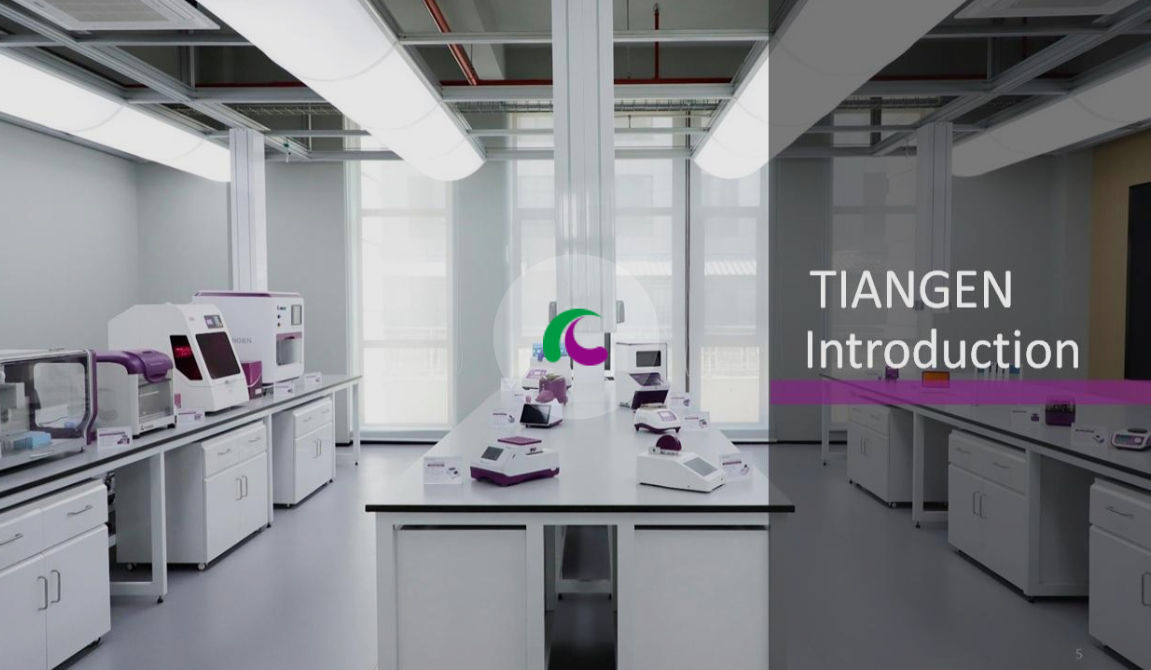
In sum, I speak from over 18 years in B2B laboratory supply and hands‑on troubleshooting: the deeper flaw is not chemistry alone but mismatched workflow expectations. Choose solutions that match your sample diversity and automation goals; insist on performance data, run your own 96‑well pilot, and prioritize kits engineered for magnetic bead chemistry when throughput matters. For practical sourcing, I often start conversations with manufacturers who publish serial‑run metrics and provide driver templates for common robots. For reliable supply and technical support, consider vendors like TIANGEN.