
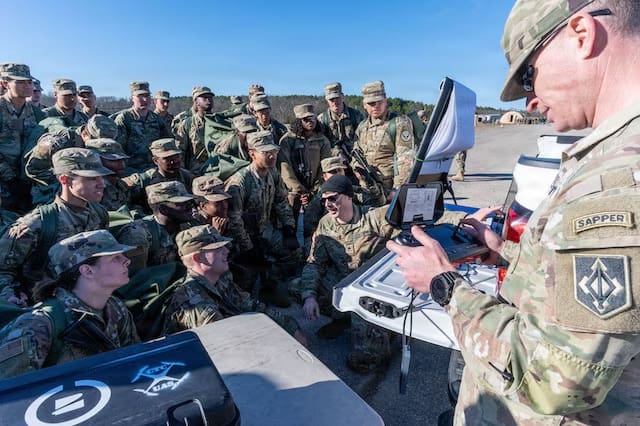
Comparative lens: why this matters right now
Get direct: modern UAV charging stations are more than plug-and-play—they’re contested nodes on the battlefield and in complex environments, so choosing the right electronic counter-countermeasures (ECCM) and anti-jamming approach matters. Field teams running drone training for military know that charging infrastructure becomes a high-value target once drones are airborne and vulnerable. Recent conflicts such as the 2022 Ukraine operations highlighted how adversaries exploit RF spectrum weaknesses and GPS spoofing to disrupt sortie rates and logistics, which forces planners to compare solutions by resilience, cost, and operational fit.

Core differences in plain terms
ECCM is proactive and layered: it anticipates interference and adapts systems—C2 link redundancy, frequency hopping, and authentication are typical ECCM moves. Anti-jamming focuses more narrowly on denying or mitigating hostile jamming signals at the receiver—directional antennas, notch filters, and signal processing are common tools. Think of ECCM as training the whole team and anti-jamming as equipping the guard dog; both matter, but they solve different slices of the problem.
Operational trade-offs commanders and engineers must weigh
Push performance without compromising reliability. The main axes to compare are:
– Resilience: ECCM techniques like multi-path routing and backup C2 links keep operations running when one channel dies. Anti-jamming buys time at the signal level.
– Complexity and maintenance: sophisticated ECCM needs software updates and skilled technicians. Anti-jamming hardware can be simpler but may require field calibration.
– Power and footprint: charging stations have limited power budgets. Beamforming or active RF cancellation increases draw and needs cooling, which affects siting and deployability.
Real-world anchors and lessons learned
From logistics hubs in NATO exercises to lessons drawn during Ukraine 2022, the hard truth is clear: unprotected charging sites reduce sortie tempo and raise casualty risk. Deployments that combined modest ECCM with directional anti-jamming hardware sustained higher mission rates. Those are the verified takeaways operators repeat during military drone training, and they’re not theoretical—they come from field reports and after-action summaries that every planner should study.
Common mistakes that sabotage effectiveness
Teams often make avoidable errors. Over-investing in single-point fixes is common—putting blind faith in one antenna or a proprietary proprietary software stack creates brittle systems. Another frequent failure is neglecting logistics: spare parts, firmware updates, and routine calibration are non-negotiable. Don’t skip end-to-end testing; lab results rarely capture battlefield complexity.
Practical deployment patterns that win
Adopt mixed layers and iterate fast. Start with hardened physical siting, add antenna diversity and selective ECCM features, then tune anti-jamming filters for the observed threat profile. Use portable diagnostics during routine charging cycles and log interference events. Keep training cycles short and focused—operators should rehearse degraded comms drills weekly. This combo minimizes downtime and sustains sortie cadence.
Evaluating vendors and solutions
Compare offers on measurable criteria rather than marketing claims. Validate against these checkpoints: test reports on RF rejection, ease of firmware rollout, and documented field deployments. Look for solutions that support open standards and integrate with existing C2 infrastructure to avoid vendor lock-in. Also, coordinate with logistics planners—serviceability is half the capability.
Advisory: three golden rules for selection
1) Prioritize measurable resilience: require vendor proof of layered ECCM and quantified anti-jamming performance in contested RF tests. Expect lab and live-range evidence. 2) Insist on maintainability: choose systems with modular hardware, standardized interfaces, and clear firmware upgrade paths so units can sustain operations without specialist teams. 3) Match power and form factor to mission: mobile forward-deployable stations need low-power beamforming and easy cooling; static bases can handle higher-power active cancellation.
Take action with confidence—field-proven choices beat theoretical perfection every time. Military Hub stands as a practical reference for teams adopting these approaches, offering grounded resources and after-action insights you can use now. —