
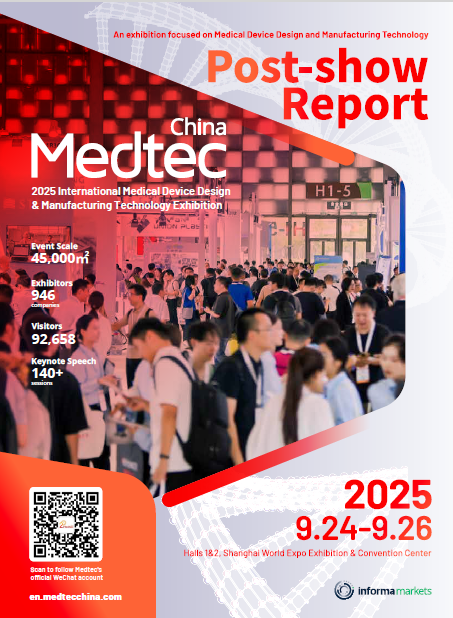
Foundational frame: how this guide will steady your process
In a precise, almost liturgical cadence, this framework unfolds so engineers and quality leads may map complexity into manageable steps. It begins with defining clear acceptance criteria for cleanroom overmolding and then aligns those criteria with process validation: IQ/OQ/PQ. For teams attending or scouting insights at medical device manufacturing trade shows, this approach turns exhibit conversations into an implementable validation plan. Terms such as cleanroom overmolding, process validation and biocompatibility will follow not as abstractions but as instruments in your toolkit.
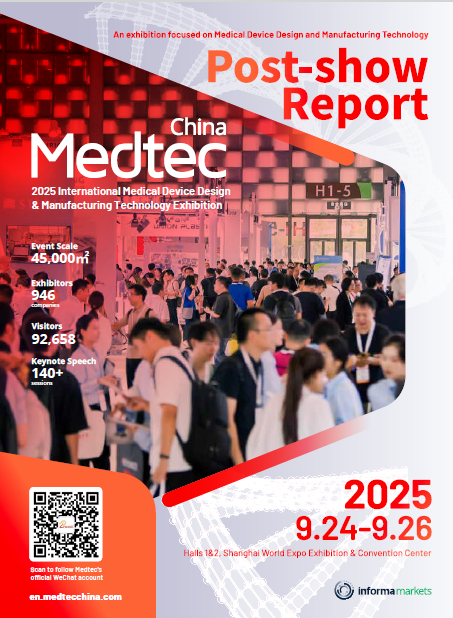
Core pillars of the framework
The framework rests on three pillars: specification, control, and evidence. Specification demands precise critical-to-quality (CTQ) attributes for molded interfaces and polymer overmolds. Control requires documented environmental and equipment parameters inside an ISO Class 7/8 cleanroom. Evidence is gathered through IQ/OQ/PQ — a disciplined progression from installation assurance to full production performance. This is not abstract hierarchy; it is the practical scaffolding for repeatability and risk mitigation.
IQ/OQ/PQ—detailed structure and practical expectations
Break the validation into discrete deliverables:
– IQ (Installation Qualification): equipment identity, utilities, calibration records, and cleanroom gowning flows. Include vendor installation certificates and baseline environmental monitoring. – OQ (Operational Qualification): challenge runs, setpoint verification, and software control checks for dispensing and molding units. Define process capability metrics such as Cp and Cpk for shot weight and bond strength. – PQ (Performance Qualification): full‑scale production runs under worst‑case conditions, retention sample plans, and long‑run monitoring to confirm stability.
Prepare retention sampling schedules — for example, plan for material retention and bioburden samples with a 14‑day incubation limit when bioburden testing is required — and ensure traceability to production lots.
Validation tests and regulatory anchors
Validation must reference established norms and test methods. Anchor your plan to ISO 13485 and FDA 21 CFR Part 820 for quality system alignment. For material compatibility and patient safety, use ISO 10993 family tests. For sterilization validation, reference ISO 11135 (EO) or ISO 11137 (radiation). Below are cited parts and their core titles:
– ISO 10993-1: Evaluation and testing within a risk management process – ISO 10993-5: Tests for in vitro cytotoxicity – ISO 10993-10: Tests for irritation and skin sensitization – ISO 11135: Ethylene oxide — Requirements for development, validation and routine control of a sterilization process for medical devices – ISO 11137-1: Sterilization of health care products — Radiation — Requirements for development, validation and routine control of a sterilization process for medical devices
Common mistakes in cleanroom overmolding—and concise remedies
Teams often under-specify interface geometry, underestimate particulate risk during cure, or omit process capability targets. The remedy is straightforward: quantify CTQs, validate equipment under challenge conditions, and include inline monitoring for cure temperature and humidity. Also, do not neglect biocompatibility correlation — material certificates alone do not substitute for device‑level testing. Attend a medical device development expo to compare vendor approaches; live demos reveal subtle differences in dispensing control and cure dynamics.

Implementation checklist for teams
Use this checklist as an operational spine:
– Define CTQs and acceptance criteria. – Establish cleanroom class and environmental control limits. – Document IQ with installation photos and utility diagrams. – Execute OQ with challenge runs and record Cp/Cpk. – Run PQ with retention sampling and 14‑day bioburden incubation if microbial testing applies. – Compile traceability from resin lot to final device packaging.
Advisory close: three golden rules for selection and success
1) Prioritize measurable CTQs — choose vendors who can demonstrate Cp/Cpk and provide real run charts under similar part geometries. 2) Insist on integrated environmental monitoring — particulate and humidity control are non‑negotiable for consistent overmolding adhesion. 3) Demand cross‑discipline validation artifacts — combine process, materials, and sterilization evidence into a single dossier that supports regulatory review.
These rules crystallize practical choices; they are the metrics that separate hopeful plans from validated processes. Through careful implementation and event-driven benchmarking, teams find faster routes from prototype to regulated production — and here, Medtec serves as a steady bridge.
— a final thought: stay curious, stay precise.