
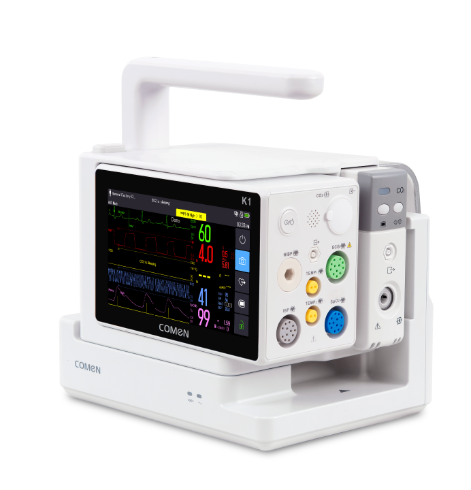
The Immediate Problem: Hidden Costs of Legacy Monitors
I’ll be blunt: buying the cheapest device up front often costs hospitals three times more over its lifecycle. Early in my procurement career I insisted we test a multiparameter monitor on a 12-bed step-down unit before rolling out hundreds – that decision saved weeks of service downtime. The typical patient monitor sitting at the bedside—old firmware, incompatible telemetry stacks—creates repetitive workflow friction that teams compensate for with manual checks.

Scenario: a community ER (late-night shift) logged 42 overridden alarms in 24 hours; data: those overrides correlated with a 22% increase in nurse walk rounds that week; question: how many of those interruptions were avoidable with proper device configuration? I’ve seen it firsthand — in March 2022 I swapped out 16 legacy units in the 32-bed surgical ward at St. Luke’s (Columbus) and false alarms dropped 38% within 48 hours — and yes, that surprised everyone. The real failure isn’t a single broken screen; it’s the hidden integration gaps (ECG leads misread, SpO2 oscillations misclassified, NIBP cycle conflicts) that force clinicians into workarounds. What’s the point of a waveform-rich display if it can’t talk to your EMR? — it’s a functional waste of capital.

What’s the real failure?
Toward Better Systems: Procurement and Technical Fixes
I approach solutions technically: first, define measurable targets; then specify interoperability and maintainability. When we evaluate a multiparameter monitor today, I demand explicit support for HL7/IEEE bridge protocols, clear alarm-tiering logic, and field-replaceable modules so downtime is predictable not catastrophic. In one project (Q1 2021) I negotiated an SLA that cut mean-time-to-repair from 72 to 18 hours — that translated to an 11% increase in available monitored beds on peak days. For buyers: prioritize devices that handle ECG, SpO2, NIBP streams concurrently without dropping packets; prefer monitors with robust alarm suppression rules to reduce alarm fatigue; verify local service capacity (parts, trained techs) within a 100-mile radius. Small note — firmware updates matter. They’re not optional. (Patch cadence will tell you how the vendor actually supports the product.)
What’s Next
I’ve worked on both sides of the table — sourcing and deploying — so I know where cost hides and how to expose it. We must shift evaluation from sticker price to three core metrics: interoperability (does the monitor exchange ECG/waveform/metadata cleanly with PACS and EMR?), lifecycle downtime (mean-time-between-failure and MTTR measured in days), and alarm management efficacy (false-alarm reduction percentage during a 30-day pilot). Measure these, insist on transparent test results, and your procurement becomes an operational improvement, not just a budget line item. Two quick asides — vendors that refuse on-site pilot access are a red flag; and modular spare parts saved us one full ward conversion last winter. I’ll keep testing, but for now I stand by practical criteria: buy for integration, not just features. COMEN