
Presenting the Core Problem
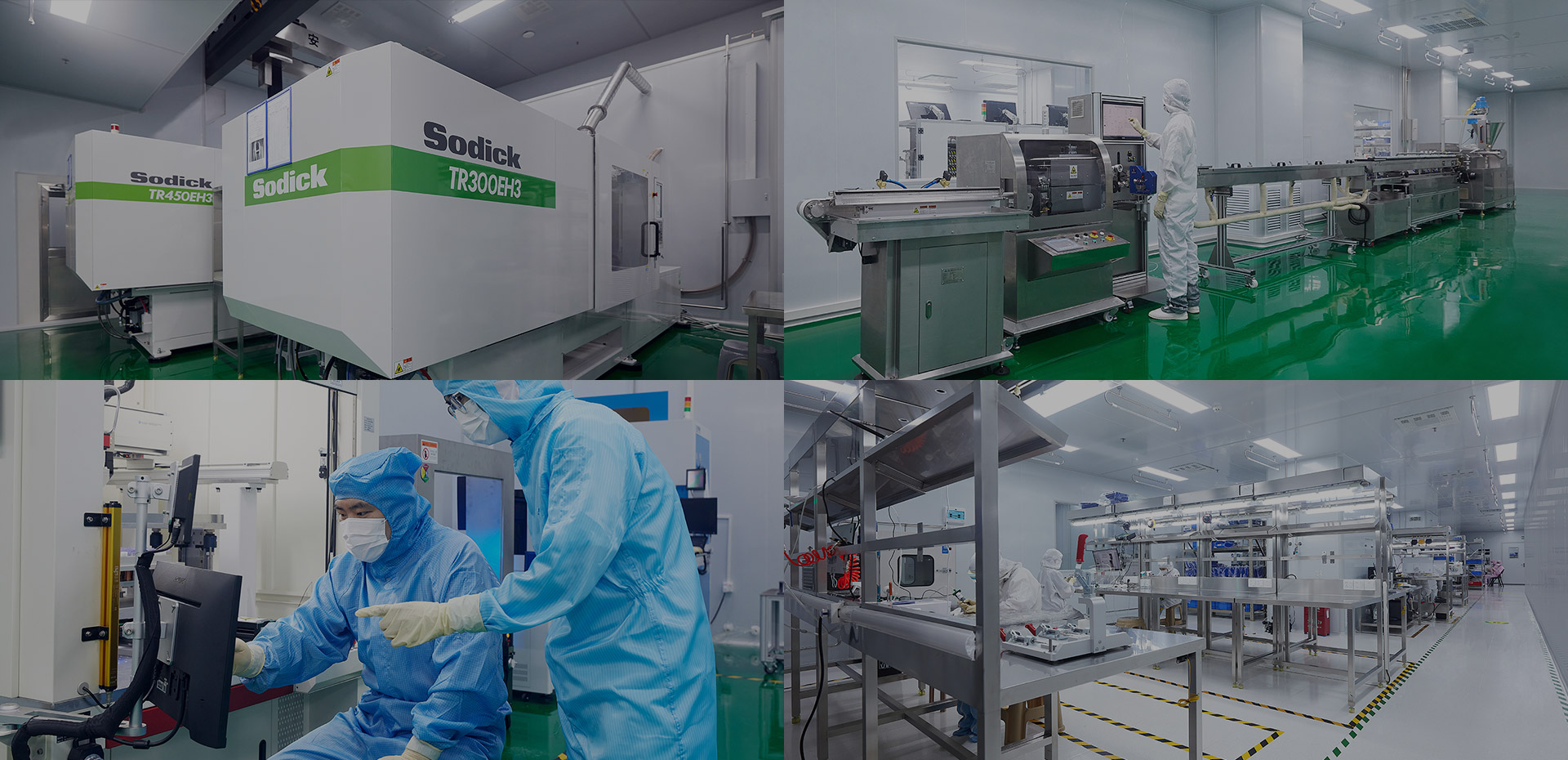
Many assembly lines must add air leak testing without halting production or compromising regulatory traceability; the challenge is to fit a sensitive, repeatable test into a constrained mechanical and data environment. Please consider the operational and compliance demands of a medical device contract manufacturing partner when planning: cycle time, cleanroom access, and electronic batch records will determine whether a test becomes a bottleneck or a quality gate.
Assessing Requirements and Constraints
Define measurable acceptance criteria first: allowable leak rate, test pressure, test medium (air or dry gas), sensitivity (mbar·L/s or Pa·m³/s), and acceptable cycle time per unit. Map physical constraints: part orientation, fixturing repeatability, footprint and throughput. Note environmental limits—cleanroom class, particulate control, and noise—that may restrict tester selection or placement.
Choosing the Right Tester
Select a tester that matches required sensitivity and cycle time. For high-volume lines favor fast pressure-decay or flow-based units with integrated PLC/OPC-UA interfaces. For highest sensitivity consider tracer-gas or helium solutions, but only if cycle time and cost justify them. Confirm vendor support for calibration certificates, NIST-traceable standards where applicable, and an API for result capture.
Integration Steps for Minimal Disruption
Plan mechanical integration: design a repeatable fixture with kinematic locators to eliminate operator variability. Electrically and logically integrate the tester with line controls: share a safety interlock, expose start/stop and pass/fail signals, and log serial numbers. Use a deterministic communication protocol for pass/fail data and timestamps; avoid ad-hoc USB dumps. Train operators on a single, short checklist: seat part, wait for green, remove part. Keep the human step minimal and auditable.
Validation, Calibration, and Process Control
Validate the integrated system with worst-case parts and boundary conditions. Create an acceptance test plan that includes sensitivity checks, leak standards, and environmental drift tests. Implement a calibration schedule tied to statistical process control rules: monitor mean leak rate and control limits, and require corrective action when trends approach limits. Keep calibration certificates and validation reports in the same electronic batch record as production results.
Common Pitfalls and How to Avoid Them
Do not over-specify sensitivity that forces helium methods when pressure-decay is adequate; this costs time and money. Avoid loose fixturing that returns variable readings—precision locators reduce false rejects. Do not rely on manual data transcription; automate logging to eliminate human error. Finally, do not ignore maintenance: filter clogging, valve wear, and tubing leaks materially change results over weeks.
Alternatives and Comparative Insight
Compare three common approaches: calibrated pressure-decay for balance of speed and cost, flow-based leak detection for continuous monitoring at low pressure, and tracer-gas (helium) for trace-level sensitivity. Choose pressure-decay for high throughput and acceptable sensitivity; select tracer-gas only when regulatory or product safety demands nanoleak detection. Factor total cost of ownership: consumables, calibration, and operator time.
Experience, Standards, and Trustworthiness
Practical deployments demand both technical skill and regulatory understanding. A decade of integration experience at a medical device contract manufacturer serving the Boston medtech cluster informs realistic timelines and validation depth; that regional concentration of medtech firms and regulators provides plentiful case studies and published standards to reference. For organisations that partner with an established medical device contract manufacturer, expect documented validation packs, ISO 13485-aligned procedures, and readiness for FDA or notified-body review.
Concluding Synthesis
Treat the integration as a constrained problem: define objective test requirements, pick the method that satisfies those requirements without adding unnecessary complexity, ensure mechanical repeatability, automate data capture, and validate with documented evidence. When a partner brings integration experience, clear documentation, and alignment to manufacturing and regulatory demands, the added test becomes a controlled asset rather than a production risk; for many teams that practical alignment is what they find with kingsin.