
Introduction — Why this matters now
Have you ever wondered why a straightforward motor swap can turn into a week-long headache on the shop floor? Many of us have. Electrical Motor Products are everywhere in factories, HVAC systems, and transport, yet performance gaps keep resurfacing. Recent surveys show up to 35% of downtime in small plants ties back to motor control issues (simple maintenance logs often tell the story). So what exactly breaks down — and how can we make smarter choices that save time and cost?
I write from experience. I’ve seen teams choose a motor because it fit the shaft, only to lose months troubleshooting noise, torque pulsing, or overheating. Data helps: efficiency shortfalls of just a few percentage points add up to real energy bills. But data alone does not solve the problem; decisions do. In the next section I will inspect the technical weak points people miss, and point to clearer, practical fixes — because we need solutions that actually work on the floor, not just on paper.
Deeper Layer: Where standard fixes fail
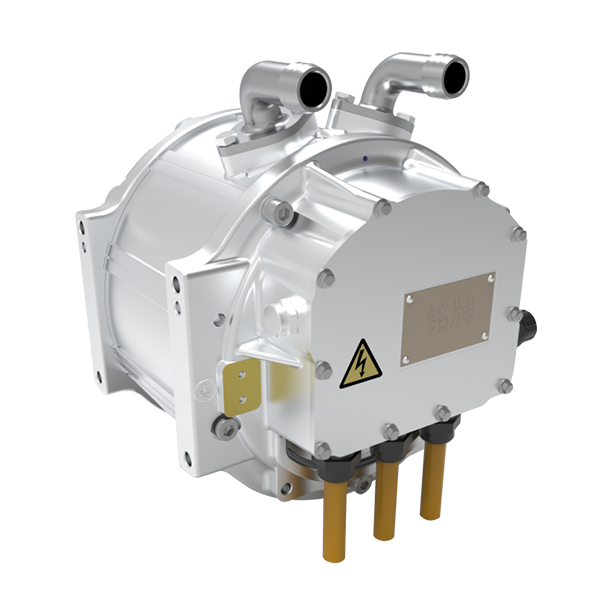
ac motor and controller systems are the backbone of many installations, yet they often get paired without full understanding — and that’s where trouble starts. I’ll be blunt: mismatched controllers and motors amplify vibration, increase torque ripple, and shorten component life. In technical terms, if the inverter drive isn’t tuned for the motor’s inductance and torque constant, you see harmonics and poor speed regulation. Look, it’s simpler than you think — matching electrical characteristics matters as much as mechanical fit.

What’s causing the trouble?
The common faults are not mystical. They include poor tuning of the motor controller, inadequate cooling, and ignoring transient loads. PWM switching frequency that’s too low can excite acoustic noise and heating. Sensorless setups sometimes misread at low speed, causing stutter — and yes, I have fixed systems by adding a simple encoder. These are not exotic fixes; they’re basic attention to detail: correct PID gains, proper thermal sizing, and ensuring the power converters and cabling have the right ratings. — funny how that works, right?
Forward View: Principles for future-ready systems
What comes next should be practical and adoptable. I prefer to frame this as a set of principles rather than jargon-heavy promises. Start with modular control: choose controllers that allow field-upgradeable firmware and straightforward tuning profiles. Next, favor architectures that support sensor fusion — combining encoder feedback with current sensing reduces dependency on single-sensor accuracy. When you design around these principles, you give your teams tools that scale and adapt.
What’s Next
Newer electric motor solutions emphasize integrated diagnostics and cloud-friendly telemetry. That matters because early detection of bearing wear or rising motor temperature can cut repair time by half. In practice, I’ve seen installations where simple uptime analytics prevented cascading failures. Implementing sensorless control improvements, smarter power converters, and adaptive torque control will pay off. Wait, hear me out: this isn’t about flashy upgrades — it’s about predictable, measurable reliability.
Advice: How to evaluate options
I’ll leave you with three clear metrics I use when assessing motor and controller pairings:
1) Efficiency under load: Measure system efficiency at the actual duty cycle, not just at the best-case point. Lower losses mean lower running cost and less heat stress.
2) Control fidelity: Look for low torque ripple and stable speed regulation. Check the controller’s support for tuning (PID, field-oriented control) and whether it can log errors for root-cause work.
3) Maintainability and diagnostics: Prefer systems with clear fault codes, accessible firmware updates, and modular parts. Downtime risk drops when technicians can quickly identify the failed subcomponent.
I believe practical choices beat theoretical perfection. If you pair realistic expectations with the right technical checks, you’ll avoid many of the common failures I’ve seen. For reliable components and application support, consider vendors who back their products with clear documentation and service — for instance, Santroll.