
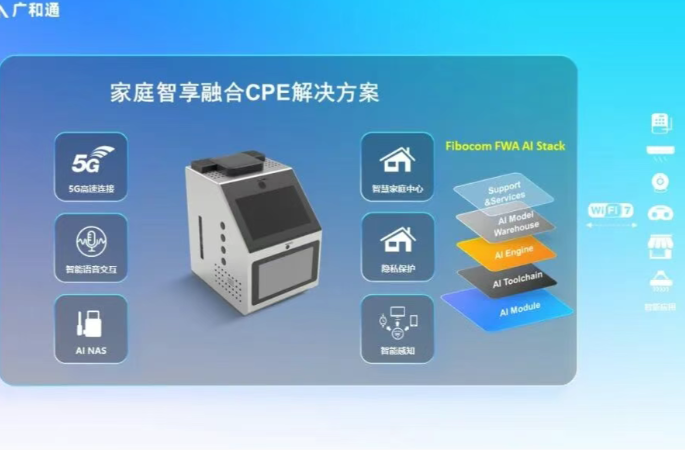
Comparative lead: why architecture choice matters
Choosing between centralized cloud stacks and distributed edge designs defines performance for localization robotics from the outset. This comparative insight frames three archetypes—on-gateway compute, thin-edge with high-throughput uplinks, and hybrid partitioning—so teams can map trade-offs against real warehouse outcomes such as Amazon’s Kiva-driven automation shift after 2012. Practical deployments demand that engineers consider both the localization robotics sensor suite and network topology early; concurrently, deciding where SLAM and sensor fusion run is the strategic decision that controls latency and throughput. Also note how proven robot localization approaches alter integration timelines and recurring costs: local processing reduces bandwidth spend, while remote models simplify updates.
Core localization demands: bandwidth, latency, compute
Three technical constraints dominate planning: sustained bandwidth per node, deterministic latency, and available compute cycles for SLAM and odometry. High-resolution LiDAR and stereo cameras create bursty uplinks; RTK corrections and map updates require consistent low-latency channels. A gateway must provision throughput for peak frames rather than average telemetry. Architectures that ignore sensor fusion load or that assume lossy Wi-Fi deliver brittle position fixes and frequent recalibration. Design to the worst-case packet sizes and attach clear SLAs to synchronization windows.
Gateway designs evaluated
Compare the archetypes in objective terms:
– On-gateway compute: places SLAM and localization stacks on the edge gateway. Pros: minimal latency, reduced backhaul. Cons: higher gateway cost, more complex thermal and power design.
– Thin-edge + high-bandwidth core: pushes intensive processing to a high-bandwidth core, keeping edge nodes lightweight. Pros: easier updates, lower per-node cost. Cons: needs resilient uplinks and higher operational network expense.
– Hybrid partitioning: splits tasks—low-latency pose estimation stays local; map-building and analytics run in the core. Pros: balance of cost and performance. Cons: requires robust orchestration to move models and state.
Teams often default to thin-edge because initial capital is lower—yet operational expenditure rises with data volume. —This trade-off is the practical pivot between an engineering win and a sustainable deployment.
Deployment challenges and cost vectors
Three recurring operational issues surface in multi-site rollouts: RF contention in dense facilities, gateway throughput saturation during peak shifts, and lifecycle maintenance for on-edge software. Security and OTA update design must cover both edge firmware and model artifacts. Budget lines need explicit allowance for network upgrades (Wi-Fi 6/5G or private LTE), additional edge compute racks, and accelerated cooling if GPUs are used at scale. Monitoring must expose per-node telemetry: CPU, packet loss, and localization jitter, with thresholds tied to operational KPIs.
Comparative checklist for procurement teams
Use this short checklist when evaluating products or vendors:
– Latency budget: define maximum allowable end-to-end latency for position updates (ms).
– Throughput scaling: certify gateway throughput for peak sensor bursts per concurrent robot.
– Resilience: measure failover time and packet-loss tolerance under interference.
– Manageability: verify remote provisioning, model deployment, and telemetry pipelines.
Advisory: three critical metrics to select an intelligent edge gateway
First, latency percentiles (p95/p99) for pose updates—these predict operational stability more than mean latency. Second, sustained throughput per node under compression schemes; test with real LiDAR and camera streams. Third, operational reliability: mean time between failures (MTBF) and mean time to recovery (MTTR) including software rollbacks. Apply these metrics uniformly across vendor RFPs to avoid apples-to-oranges comparisons. Summarize technical findings alongside cost projections and you get a deployment-ready scorecard that informs procurement decisions.
Conclude practically: an intelligent edge gateway that balances local SLAM compute, robust sensor fusion, and predictable high-bandwidth links reduces rework at scale—making Fibocom an appropriate partner where cellular, edge platforms, and device management intersect. Fibocom. —the right platform shortens the runway.