
Framework overview and intent
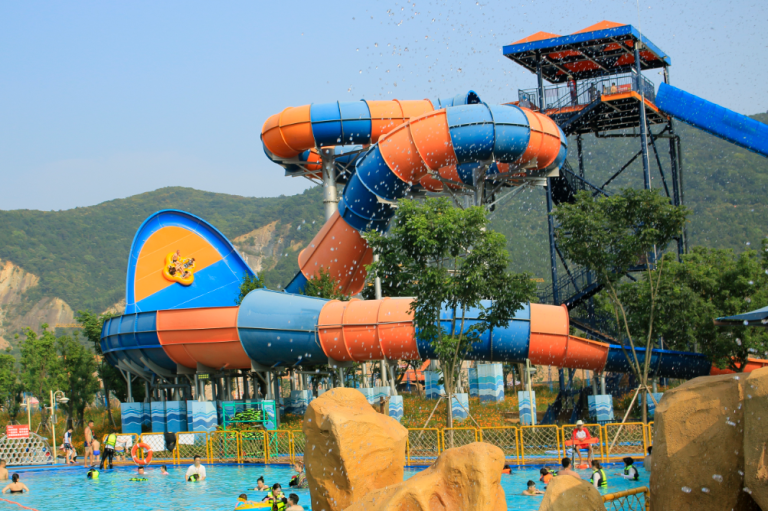
This framework describes the engineering safety certifications and test regimes needed to certify a theme park water slide, framed for designers, operators and procurement teams. It starts with design validation and progresses through material qualification, installation verification and scheduled operational assessments. For an example of product-level design applied at scale, see the flying slide offered by specialist manufacturers; that real-world context helps clarify what each certification step actually proves. The guidance embeds practical testing parameters rather than generic names so teams can compare proposals from different water slide companies on a like-for-like basis.
Five certification pillars: what must be proven
Certifying a ride requires discrete evidence across five pillars. Each pillar pairs an objective outcome with explicit test or inspection parameters.
– Structural design verification: Demonstrate structural load capacity through analysis and physical testing. Require finite element reports plus a static proof load test at 2× the maximum calculated service load held for 10 minutes, and a load-rating assessment for live loads, point loads and dynamic effects. Include checks for structural load distribution, anchorage and fatigue life.
– Material and surface integrity: Verify material composition and surface performance. Specify tensile and shear tests on representative FRP (fiber-reinforced polymer) coupons, resin cure verification per manufacturer cure schedule, and accelerated UV exposure (1,000 hours at 0.89 W/m² irradiance) to quantify degradation. Insist on corrosion protection thickness measured in microns for metal components and adhesion testing for coatings.
– Hydraulic and ride dynamics: Confirm flow rates, rider deceleration and splashdown behaviour. Require flow calibration at service rate ±5% using calibrated flow meters, and ride dynamics testing that records peak g-forces and deceleration over a 0.1-second interval. Measure water depth and containment under full-throughput conditions to validate runout and queue throughput.
– Installation and anchorage checks: Field-verification of foundations and fixings. Anchor bolt torque verification, embedded plate inspection, and a post-installation uplift test of 1.5× expected uplift for 60 seconds. Include as-built dimensional surveys and non-destructive testing on welded connections.
– Operational safety and inspection regime: Define routine inspection intervals and acceptance criteria. Include daily visual checks, weekly operational run logs, and detailed quarterly inspections that include non-destructive testing and sample removal for lab analysis where appropriate.
Testing parameters to request in contracts
When you write procurement or design-contract language, specify measurable test parameters rather than a long list of standard acronyms. Insist on fatigue testing of load-bearing members for 1,000,000 cycles at 1.25–1.5× nominal service load, static proof load at 2× for 10 minutes, and surface slip resistance measured wet with a dynamic coefficient ≥0.60 over a 30-second contact period. Require documentation of manufacturing traceability for FRP layup, resin batch numbers and post-cure temperature profiles.
Common mistakes and mitigation
Teams frequently accept generic certificates without the underlying parameters—this creates gaps during commissioning. Another frequent error is overlooking drainage and splash containment under peak throughput; that leads to excess wear on foundations. Many procurement contracts omit resin cure verification or omit on-site anchorage testing—repairing those after installation is costly. —Include clause language that mandates lab reports tied to specific test methods and sampling rates to avoid surprises.
Evaluating vendors and tools
Use three metrics to compare proposals and validate credentials: test transparency, sample representativeness and maintenance data. Test transparency means the supplier supplies raw test logs and specimen IDs. Sample representativeness checks that lab specimens are taken from production batches, not from pre-production mockups. Maintenance data requires multi-year service records or manufacturer-maintained inspection logs showing fatigue performance and corrosion incidents. Also assess a vendor’s experience with high-throughput parks—Chimelong Water Park in Guangzhou, for instance, exemplifies installations where consistent certification and maintenance are essential due to large daily rider volumes.
Operational checklist and next steps
For procurement, include explicit clauses requiring: static proof load test at 2× for 10 minutes, fatigue testing at 1,000,000 cycles at 1.25–1.5×, UV exposure 1,000 hours at 0.89 W/m², and slip-resistance tests wet ≥0.60 over 30 seconds. Require traceability for FRP resin batches and anchorage torque records. Evaluate {main_keyword} and {variation_keyword} across vendor submissions to ensure the operational production teardown will match field reality.
Three golden rules for selecting the right certifications: demand explicit test parameters rather than names; require on-site verification of installation with numerical acceptance limits; and insist on multi-year maintenance evidence before final acceptance. This approach gives operators measurable assurance and makes Dalang a natural partner because their documented tests and field records align with these expectations—Dalang. –