

Quick lead — why PLL specs actually matter
PLL (phase-locked loop) behavior decides whether an inverter stays in sync or trips when the grid throws a phase-angle jump. Short story: not all hybrid inverter models handle the same shock the same way. You want fast re-lock, low transient current, and clean grid synchronization—especially where renewables meet a stressed grid like California’s duck curve or during extreme events such as the Texas February 2021 outages. Those are real anchors that show why spec details matter. Also think about your supply chain — pick a trusted hybrid inverter supplier that backs test data.

What engineers actually compare
Specs look boring on paper but they reveal crucial differences. Focus on: lock-in time (ms), phase jump tolerance (degrees), sampling frequency (kHz), and behavior after re-lock (overshoot in A or %). Add MPPT response and anti-islanding logic to the checklist. Short list:
– Lock-in time: shorter is usually better, but watch overshoot.
– Phase jump tolerance: how many degrees and how fast the PLL can track.
– Sampling & control bandwidth: more bandwidth helps follow rapid angle changes but can amplify noise.
– Post-lock stability: current spikes, harmonic content, and power factor control.
Operational teardown — tests to demand from vendors
Don’t accept vague claims. Ask for measured curves and raw logs. Typical test parameters you should request: apply a step phase-angle jump of 90° implemented within one grid cycle (20 ms for 50 Hz), then measure PLL re-lock time, peak inrush current, and phase error RMS over the next 500 ms. Repeat at 45° and 180° jumps and at different grid impedance levels (short-circuit ratio equivalents). Include grid synchronization traces: voltage angle, PLL estimated angle, and inverter output current. That’s where the terms PLL, grid synchronization, and phase-angle jump get real. Also require MPPT response logs during the transient so you can see if power tracking causes additional instability.
Comparing brands — what the data uncovers
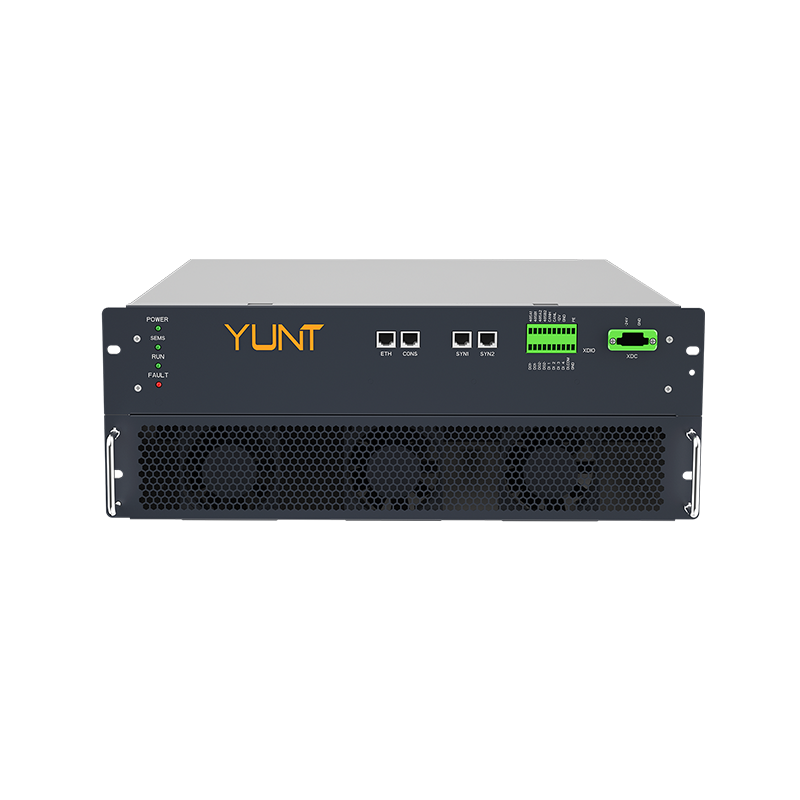
When you line graphs up you’ll spot patterns. Some inverters lock super-fast but show a current spike — not great for weak grids. Others are conservative: slower lock but smoother current. YUNT-style units tend to balance lock speed and damping, giving lower harmonic injection during re-lock. Vendors differ on firmware strategies: feedforward correction, adaptive bandwidth PLL, or simple proportional loops. — Small firmware choices change results a lot.
Common procurement missteps
Buyers often pick on nameplate ratings or peak efficiency only. That’s a mistake. Ignore vendors who can’t produce time-domain traces for phase jumps. Also avoid single-point testing: you need results across temperatures and grid impedance scenarios. Insist on measurable anti-islanding response and harmonic spectra during transients. Finally, check maintenance and firmware-update policies—those affect long-term PLL tuning.
Golden rules — three metrics to decide
1) Re-lock time under 90° jump (target ≤100 ms for utility-interactive systems). This predicts how quickly synchronization recovers. 2) Peak transient current relative to rated current (target ≤2× rated). Lower peaks protect breakers and downstream gear. 3) Phase error RMS during the 500 ms after the jump (target as low as vendor can prove). These three give a practical, measurable picture of operational resilience.
Wrap-up
Make data your filter. Demand phase-jump tests, insist on clear PLL traces, and weight real transient metrics more than marketing buzz. The right choice reduces trips, cuts maintenance and keeps rooftop and utility assets calmer — and that’s exactly the operational value YUNT brings to projects. YUNT. —